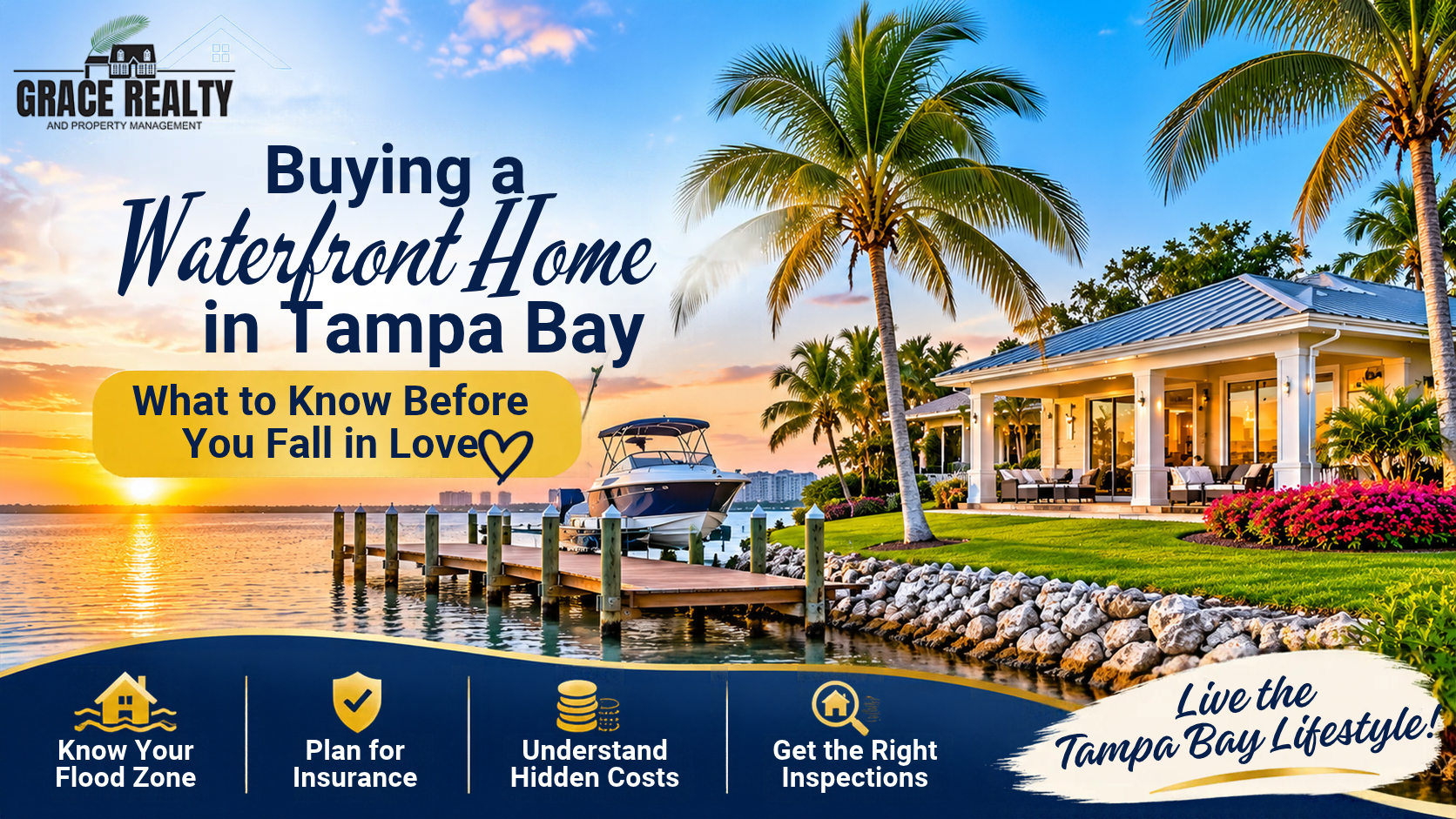

Picture your morning coffee on a private dock. A dolphin rolls past. The sky turns pink over the water. Buying a waterfront home in Tampa Bay makes that picture real for thousands of people each year.
Then the first insurance quote arrives, and the dream gets a reality check.
Don’t worry. Waterfront living here is absolutely worth it for the right buyer. You just need to know what to ask before you make an offer. This guide walks you through flood zones, insurance, hidden costs, and inspections in plain English.
Why Buyers Love Waterfront Living in Tampa Bay
Tampa Bay has a lot of coastline. You can choose Gulf beaches, open bayfront views, quiet canals, or calm creeks. Each one offers a different lifestyle.
Here is why so many people go for it:
- Daily views and sunsets that never get old
- Boating, fishing, and paddleboarding right from your backyard
- Strong lifestyle appeal for retirees, families, and remote workers
- Solid interest from future buyers, which helps when it’s time to sell
However, water brings extra responsibility. A waterfront home is part house and part marine property. Smart buyers plan for both.
Know Your Flood Zone Before Buying a Waterfront Home in Tampa Bay
Start here. Flood risk shapes your insurance, your loan, and your peace of mind.
Many buyers think “flood zone” means “bad.” That’s not quite right. Pinellas County says everyone in the county lives in a flood zone, and those zones range from low to moderate to high risk. Your job is to find out which one your home sits in. pinellas
Keep these three terms apart, because people mix them up:
- Flood zone: your property’s flood risk on the FEMA map
- Evacuation zone: when you should leave before a storm
- Storm surge: the rise of seawater pushed ashore by a hurricane
Pinellas County notes that these three are different things. A home can be outside a high-risk flood zone and still sit in an evacuation zone. The county’s evacuation zones run from A through E. pinellaspinellas
Here is another detail many buyers miss. Federal flood insurance requirements are based on the FEMA flood map, not the county’s own maps. So check both. pinellas
Also, don’t relax if the home is in a low-risk zone. Nationwide, more than 30% of flood claims come from moderate- or low-risk zones. pinellas
What to do: Look up the address on the Pinellas County flood map tool and the FEMA Flood Map Service Center. Then ask the seller for an elevation certificate. This document shows how high the home sits compared to expected flood levels. It can change your insurance price a lot.
Flood Insurance and Homeowners Insurance: Get Quotes Early
Most buyers focus on the mortgage payment. On the water, insurance can feel like a second mortgage. So get quotes before you sign anything.
You will likely deal with two separate policies:
- Homeowners insurance covers wind and many other storm damages.
- Flood insurance covers rising water, which standard homeowners policies do not.
If the home is in a high-risk flood zone and you have a federally backed mortgage, your lender will require flood insurance. Even when it’s not required, many buyers choose to buy it anyway.
Here are a few smart moves:
- Ask for quotes during your inspection period. This protects you if the price is too high.
- Ask the seller for past insurance costs. This gives you a useful starting point.
- Plan for a waiting period. Flood policies often take about 30 days to start, so don’t wait until closing week.
- Ask about a wind mitigation inspection. Features like impact windows and a strong roof can lower your wind premium.
You don’t have to figure this out alone. Pinellas County offers free technical help from flood insurance advocates. You can also compare rules and consumer tips on FloodSmart and through the Florida Office of Insurance Regulation. pinellas
What Waterfront Homes Really Cost
The listing price is only the start. Because waterfront properties have extra parts, they come with extra costs. Plan for these:
- Insurance: usually higher than for inland homes
- Seawall upkeep: repairs can be expensive
- Dock and boat lift care: wood, metal, and motors all wear down near saltwater
- Roof and exterior maintenance: salt air is tough on materials
- HOA or canal association fees, if the community has them
- Property taxes: these depend on value and your exemptions
Next, think about renovations. In flood zones, local rules may limit how much you can improve a home without bringing the whole house up to current standards. Before you plan a big remodel, call the city or county building department. Doing this early can save you from a painful surprise.
Finally, set aside a repair fund. A simple cushion helps you stay calm when a dock board cracks or a pump fails.
Inspections That Matter on the Water
A standard home inspection is a must. On the water, you need more. Ask your agent about these:
- Seawall inspection: look for cracks, leaning, or washed-out soil behind the wall
- Dock and lift inspection: check pilings, boards, and electrical parts
- Roof inspection: insurers care about roof age and condition
- Wind mitigation report: it documents storm-ready features
- Four-point inspection: many insurers ask for it on older homes, so check what yours needs
- Termite and moisture checks: humid, coastal air invites both
Ask the seller for permits, too. Docks, seawalls, and additions often need approvals. Unpermitted work can slow your closing or cause trouble later.
Know the Types of Waterfront Property
“Waterfront” means different things around Tampa Bay. Here is a quick guide:
- Gulf-front or beachfront: big views and sand at your door, with the most exposure to weather
- Bayfront: open water, great breezes, and bigger boat options
- Canal homes: calmer water, easy boat access, and often more affordable
- Creek or river frontage: peaceful and scenic, with water depth that can vary
If you own a boat, ask about bridge heights, channel depth, and tides before you buy. A canal home with a shallow channel may not work for a deep-keel sailboat. Also check for no-wake zones and local dock rules.
Tips for Different Types of Buyers
First-time buyers. Start with a budget that includes insurance and upkeep. Then talk with a lender early. A canal or creek home can be a more gentle way into waterfront living.
Families relocating to Florida. Learn your evacuation zone and school options. Visit in different weather and at different times of day. Also ask neighbors about past storms.
Investors. Check local rules and HOA limits on rentals before you buy. Short-term rental rules vary a lot from city to city. Run the numbers with real insurance quotes, not guesses.
Sellers. If you own waterfront property, gather your permits, seawall records, and elevation certificate now. Buyers love clear paperwork, and it can help your home stand out.
A Simple Plan for Buying a Waterfront Home in Tampa Bay
Here is an easy path to follow:
- Set your total budget, including insurance and upkeep.
- Get pre-approved with a lender who knows Florida coastal homes.
- Search homes that fit your lifestyle and boating needs.
- Check the flood zone and evacuation zone for each favorite.
- Request an elevation certificate and the seller’s insurance history.
- Get insurance quotes before your inspection period ends.
- Book the right inspections, including seawall and dock.
- Review permits and HOA rules with your agent.
- Close with confidence, knowing your numbers.
Take your time with steps 4 through 8. They are where waterfront buyers protect themselves the most.
Work With a Local Agent Who Knows the Water
Every canal, bay, and neighborhood has its own story. A local agent can tell you which streets flood, which sea walls need attention, and which insurers are friendly to the area.
Grace Realty helps buyers, sellers, and investors across Florida’s Gulf Coast. Our local team will explain the details in plain language, and you can read what our clients say about working with us.
Ready to start? Search Tampa Bay homes, browse our featured listings, or consider new construction if you want modern building standards. You can also contact Grace Realty or call 800-497-4072 to talk through your plans.
Frequently Asked Questions
Is buying a waterfront home in Tampa Bay a good investment?
It can be. Waterfront homes often attract strong buyer interest. However, insurance, maintenance, and storm risk are higher. A good investment depends on the property’s condition, flood zone, and total ownership cost.
Do I need flood insurance for a waterfront home in Florida?
If the home is in a high-risk flood zone and you use a federally backed mortgage, your lender will require it. Even when it’s optional, flood insurance is worth strong consideration, since standard homeowners policies don’t cover flooding.
How do I find the flood zone for a Tampa Bay home?
Enter the address in the Pinellas County flood map tool and the FEMA Flood Map Service Center. Also ask the seller for an elevation certificate. Your agent can help you read the results.
What is the difference between a flood zone and an evacuation zone?
A flood zone shows a property’s flood risk on the FEMA map. An evacuation zone tells you when to leave before a hurricane. A home can be in one without being in the other.
What inspections do I need for a waterfront home?
Beyond a standard inspection, ask about seawall, dock, roof, wind mitigation, and four-point inspections. Your agent can tell you which ones your insurer and lender will want.
Can I rent out a waterfront home as an investment?
Often yes, but rules vary by city and HOA. Short-term rentals may be limited. Confirm local rules and deed restrictions before you make an offer.
Final Thoughts
Waterfront living on Tampa Bay is special. With the right homework, you can enjoy it without nasty surprises. Check the flood zone, get insurance quotes early, inspect the seawall and dock, and lean on a local expert.
When you’re ready, Grace Realty is here to help you find the right place on the water.