



One of Florida’s most valuable resources is its natural environment, which sustains millions of people’s daily lives, promotes tourism, and supports wildlife. Governor Ron DeSantis announced a significant $112 million investment on December 3 that will improve the state’s water quality, increase the availability of alternative water sources, restore freshwater springs, and combat dangerous algal blooms. At a time when Florida’s population is expanding more quickly than any other state in the union, this substantial funding package seeks to safeguard the state’s water resources.
The three primary goals of the funding are enhancing water quality, repairing Florida’s delicate freshwater springs, and developing technology and research to counteract dangerous algal blooms. These investments are critical to Florida’s economic and environmental well-being at a time when the state is still expanding at an unprecedented rate.
A Major Step Toward Florida’s Water Sustainability
Speaking at a news conference in Tampa, Gov. DeSantis emphasized that keeping Florida’s water clean is essential not just for the environment, but for the entire state economy—from tourism and fishing to real estate and recreation.
The newly announced $112 million package will support more than 50 projects across Central Florida and the Gulf Coast. These include alternative water supply projects, wastewater improvements, septic-to-sewer conversions, and advanced algal bloom research conducted by Florida universities.
Florida Department of Environmental Protection (DEP) Secretary Alexis Lambert joined the governor at the event, saying that with rapid growth comes increased responsibility. Ensuring Florida has clean and reliable water is now more important than ever.
$50 Million for Alternative Water Supply Projects
The expansion of alternative water sources, which lessen the strain on conventional freshwater sources like aquifers, will receive a sizable portion of the funding.
Fourteen significant projects will be supported by this $50 million investment, including:
- Increasing the capacity of reclaimed water facilities
- Creating systems for recharging aquifers
- Modernizing infrastructure for water conservation and storage
- Endorsing innovative technologies for sustainable water supply
Once completed, these projects are expected to produce up to 94 million gallons of additional water daily. That is a significant boost as Florida’s population continues to skyrocket.
Communities benefiting from these projects include:
- Cape Coral
- Winter Haven
- Live Oak
- Polk County
- And several river and water management districts
With water demand rising steadily, these investments will help ensure that Florida has a sustainable supply for decades to come.
$50 Million to Restore and Protect Florida’s Springs
Florida’s springs are some of the most beautiful and ecologically sensitive environments in the state. Over the years, many have suffered from excessive nutrient pollution, declining flow levels, and the impacts of outdated wastewater systems.
The state’s new investment includes another $50 million for springs restoration, which will fund 23 projects focused on:
- Septic-to-sewer conversions
- Upgrading aging wastewater systems
- Reducing nitrogen pollution
- Improving spring flow and water clarity
- Restoring essential spring habitats
The funding will support communities in Citrus, Hernando, Levy, Leon, and Jackson counties—regions home to some of Florida’s most iconic springs.
It is anticipated that these initiatives will greatly lower nitrogen pollution, enhancing the quality of springs like Crystal River.
- Crystal River
- Springs at Homosassa
- Springs in Wakulla
- Springs in the Rainbow River
Preserving springs is essential to safeguarding Florida’s natural ecosystems and drinking water, not just for aesthetic reasons.
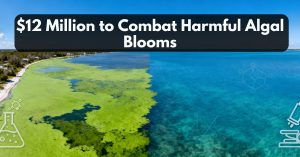
$12 Million to Combat Harmful Algal Blooms
One of Florida’s most urgent environmental problems is harmful algal blooms, or HABs. Fish kills, respiratory problems, beach closures, and significant financial losses can result from these toxic blooms, which can impact beaches, lakes, rivers, and estuaries.
To address this, the state is investing $12 million in harmful algal bloom prevention and technology. Sixteen new projects will help improve detection, monitoring, and rapid response efforts.
Florida’s major universities will play a crucial role, including:
- University of South Florida
- University of Florida
- Florida International University
- Florida Atlantic University
- University of Miami
The projects aim to develop early-warning systems, predictive tools, and technologies that reduce bloom intensity and prevent widespread outbreaks. This investment continues Florida’s broader research strategy to better understand water quality issues and protect coastal and inland waterways.
A Continued Commitment to Florida’s Environment
The newly announced funding adds to the $430 million already invested in water protection projects since Gov. DeSantis took office. More than 1,200 water improvement projects have been launched statewide to reduce harmful nutrients, modernize infrastructure, and restore natural water systems.
Florida DEP Secretary Lambert emphasized that the state’s rapid population growth demands a forward-thinking approach. Clean water supports tourism, real estate, fishing, and agriculture—making water protection an economic priority as much as an environmental one.
Why This Funding Matters for Florida Residents
These projects offer significant benefits that will be felt statewide:
1. Cleaner, Healthier Waterways
Reducing nitrogen and pollutant levels will improve water clarity and protect ecosystems, making rivers, lakes, and springs safer for swimming, fishing, and wildlife.
2. Greater Long-Term Water Supply
With alternative water supply projects producing nearly 100 million gallons daily, Florida will be better prepared for future consumption demands.
3. Stronger Protection Against Algal Blooms
Advanced technology and research will help communities detect and manage blooms before they cause large-scale damage.
4. Economic Stability
Cleaner waterways support Florida’s major industries, protect property values, and ensure safe recreation areas for residents and tourists.
5. Public Health and Safety
Reduced algal bloom exposure means fewer respiratory issues, safer beaches, and healthier communities.
Frequently Asked Questions (FAQ)
1. Why did Gov. DeSantis allocate $112 million for water projects?
The funding addresses growing concerns about water quality, population growth, harmful algae blooms, and the need for sustainable water supplies across Florida.
2. What areas will benefit from the new funding?
Central Florida, the Gulf Coast, and regions with major spring systems—such as Citrus and Hernando counties—will receive most of the project funding.
3. What are harmful algal blooms, and why are they dangerous?
Harmful algal blooms are toxic algae outbreaks that can kill fish, damage ecosystems, affect air quality, and cause health problems for people and animals.
4. How will the alternative water supply funding help Florida?
It will help produce up to 94 million gallons of new water daily through reclaimed water, aquifer recharge, and conservation techniques.
5. Which universities are involved in the research projects?
The University of South Florida, UF, FIU, FAU, and the University of Miami are among the key institutions receiving funding.
6. How much funding has Florida invested in water protection since 2019?
Including the new $112 million, Florida has invested over $430 million in water quality and restoration initiatives.
7. Will these projects impact local communities directly?
Yes. Residents will benefit from cleaner waterways, better infrastructure, improved public health, and stronger environmental protection.
Information for this article was sourced from WTSP News. You can read the original report here: https://www.wtsp.com/article/news/local/hillsboroughcounty/gov-ron-desantis-tampa-funding-water-resources/67-da72c519-fe38-40b6-bbc3-2dcc91c7f8bb.