
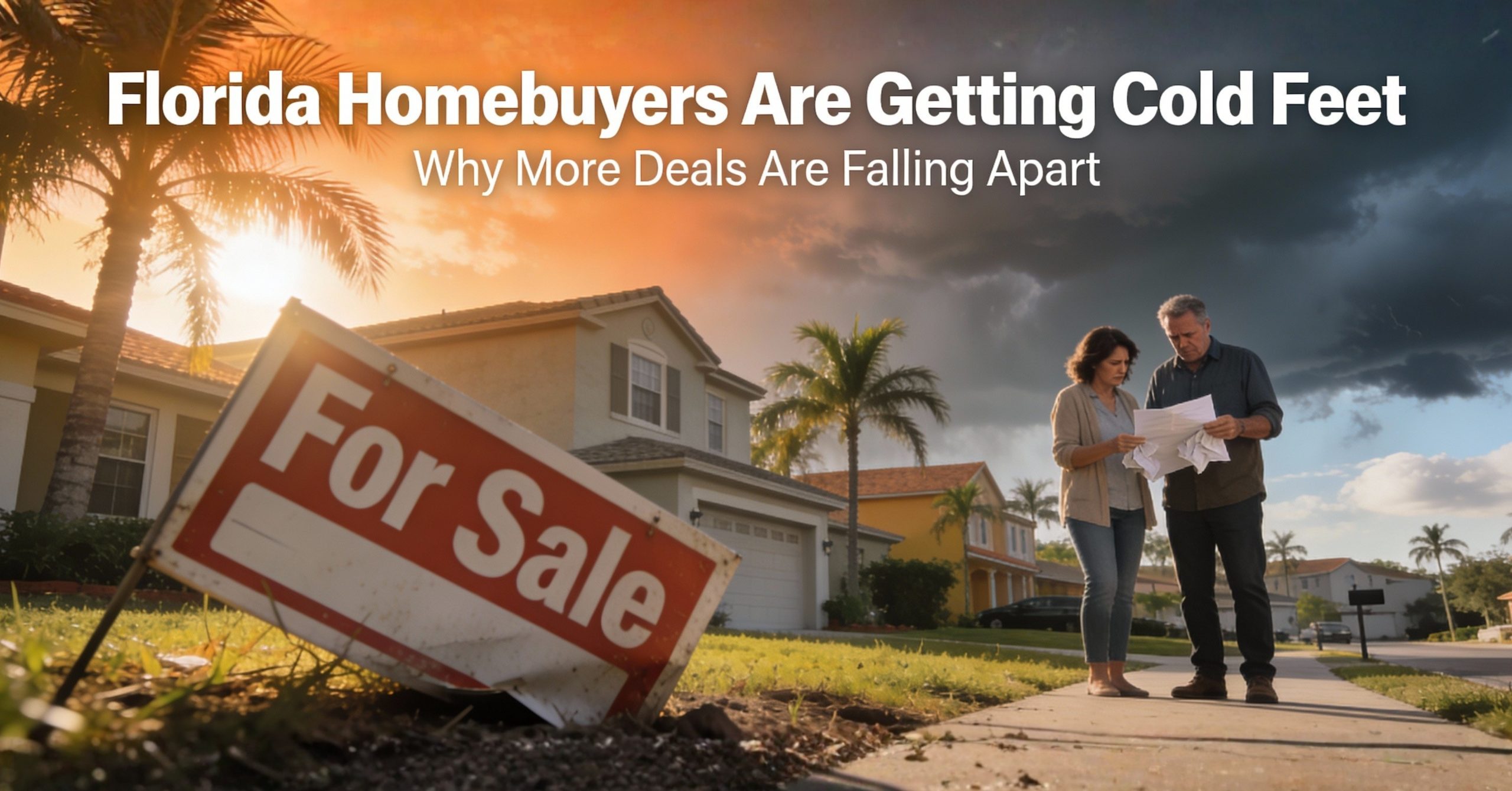

The Florida housing market, long known for its fast sales and competitive bidding wars, is showing clear signs of change. In recent months, a growing number of homebuyers are walking away from purchase agreements after going under contract. This trend, confirmed by new real estate data, suggests a noticeable shift in buyer confidence, market dynamics, and affordability concerns across the state.
From South Florida to Central and North Florida, canceled home contracts are becoming more common. While this may seem alarming at first glance, many experts believe this is not a collapse—but rather a long-overdue market correction.
A Rising Trend in Canceled Home Deals
According to a recent analysis by Redfin, approximately 53,000 home-purchase agreements were canceled nationwide in October, representing 15.1% of homes that went under contract during that month. This figure marks an increase from 14.3% in October of the previous year, highlighting a growing reluctance among buyers to finalize deals.
Florida stands out as one of the states experiencing higher-than-average cancellation rates, alongside Texas. These two states also lead the nation in new home construction, which is a key factor influencing buyer behavior.
When buyers see more inventory entering the market, urgency fades. Instead of feeling pressured to close quickly, many buyers are choosing to step back, reassess, and search for better options.
Florida Metro Areas Seeing the Most Cancellations
Several major Florida metro areas experienced increased contract cancellations compared to a year earlier:
- Fort Lauderdale: Around 20% of pending sales fell out of contract
- Miami: Approximately 17.6% of deals were canceled
- Orlando: Roughly 19.1% cancellation rate
- Jacksonville: Close to 19.2% of pending sales did not close
Not all areas followed the same pattern. West Palm Beach showed stable cancellation rates year over year, while Tampa actually saw a decline compared to the previous year. Still, the overall trend across Florida points to buyer hesitation.
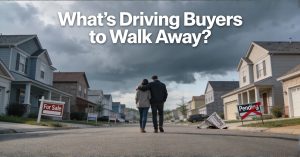
What’s Driving Buyers to Walk Away?
Real estate professionals across Florida cite several interconnected factors contributing to this growing trend.
1. Inventory Surge Is Changing Buyer Psychology
For years, Florida sellers benefited from a severe shortage of homes. That shortage is easing. With more listings available—especially new construction—buyers feel empowered to wait.
This surplus has eliminated buyer urgency and shifted negotiating power. Buyers are more willing to cancel contracts if they believe something better, cheaper, or less risky will appear.
2. Rising Insurance Costs Are a Major Shock
Florida homeowners now face some of the highest insurance costs in the country, often exceeding the national average by thousands of dollars annually. Many buyers do not fully understand these expenses until after signing a contract.
Once insurance quotes come in, buyers are often surprised by the long-term financial burden, leading them to reconsider the purchase altogether.
3. HOA Fees and Hidden Ownership Costs
Beyond insurance, homeowners association (HOA) fees—especially in condos and planned communities—are rising rapidly. Combined with taxes, maintenance, and special assessments, the true cost of ownership can far exceed expectations.
For budget-conscious buyers, these unexpected costs are deal-breakers.
4. Sellers Are Reluctant to Lower Prices
Despite slowing demand, many sellers are unwilling to reduce asking prices. Florida currently leads the nation in delisted homes, meaning sellers are pulling listings off the market instead of adjusting prices.
This standoff between buyers and sellers increases the likelihood of canceled contracts when negotiations stall.
5. Economic and Job Market Uncertainty
Concerns about the broader economy, job security, and future market conditions have created a “wait-and-see” mindset. Buyers who fear potential layoffs, income instability, or further price declines are more inclined to pause major financial decisions.
6. Climate Anxiety Is Playing a Role
Hurricanes, flooding, and rising sea levels are influencing buyer sentiment, particularly in South Florida. Some buyers reconsider after factoring in climate risks and future insurance availability.
This type of climate-related hesitation is becoming more common and increasingly affects purchasing decisions.
7. Mortgage Rate Volatility and Appraisal Gaps
Even small changes in mortgage rates can significantly impact monthly payments. Buyers who qualify comfortably at one rate may struggle when rates rise slightly before closing.
Additionally, appraisal gaps—when a home appraises for less than the agreed price—force buyers to either bring more cash to the table or walk away.
How Prices Are Responding
The impact of rising cancellations can already be seen in certain price trends:
- Broward County: Median single-family home prices declined slightly from summer highs
- Palm Beach County: Prices remained higher, showing regional variation
- Condos and townhomes: Prices have softened in some markets, especially where inventory is growing
These mixed signals suggest the market is correcting gradually rather than collapsing.
Is This a Housing Crash?
Most experts say no.
What Florida is experiencing appears to be a slow, controlled market correction. Prices are adjusting, buyers are gaining leverage, and sellers are being forced to confront new realities.
Rather than signaling a crisis, rising cancellations may indicate a healthier, more balanced market in the long term.
What This Means for Buyers
For buyers, this shift can be an opportunity:
- More inventory to choose from
- Greater negotiating power
- Less pressure to waive inspections or contingencies
However, buyers must still carefully evaluate insurance costs, HOA fees, and long-term affordability before committing.
What This Means for Sellers
Sellers may need to:
- Price homes more realistically
- Be flexible during negotiations
- Address insurance and inspection concerns proactively
Homes that are priced correctly and transparently are still selling—just not as instantly as before.
Short-Term Outlook for the Florida Market
Industry professionals predict continued stagnation in the early months of 2026, followed by gradual stabilization. The days of runaway price growth appear to be over, at least for now.
As one broker put it, “This isn’t a collapse—it’s the market correcting itself.”
Frequently Asked Questions (FAQ)
Why are more Florida homebuyers canceling contracts?
Buyers are reacting to higher insurance costs, increased inventory, economic uncertainty, and mortgage rate fluctuations that make homes less affordable than expected.
Is Florida the only state seeing this trend?
No. Texas and several other high-growth states are experiencing similar patterns, though Florida is among the most affected.
Does a canceled contract mean prices will crash?
Not necessarily. Most experts see this as a correction, not a crash. Prices may stabilize or decline slightly in some areas.
Are condos more affected than single-family homes?
Yes, in many Florida markets, condos face higher insurance costs and HOA fees, leading to more buyer hesitation.
Is this a good time to buy in Florida?
For prepared buyers who understand total ownership costs, this could be a good time due to increased choices and negotiation power.
Here’s a short reference line you can add to your blog for the source you provided:
This article is based on the report “Florida homebuyers getting cold feet? Many more are walking away from purchases” published on December 25, 2025, by the Tampa Bay Times.