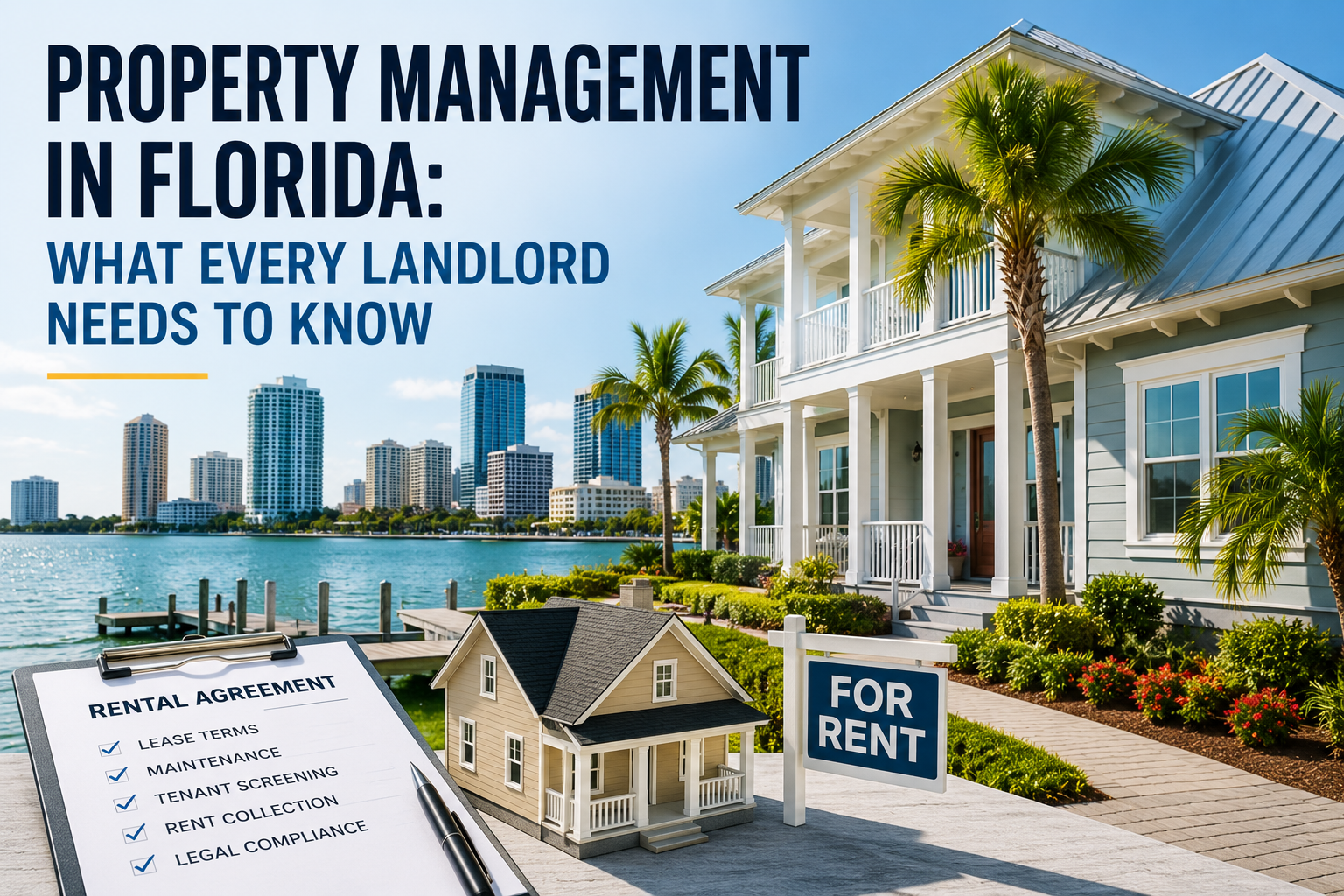

Property management in Florida is one of those topics that sounds simple until you actually own a rental. This guide covers what every landlord and buyer needs to know before renting out a Florida property in 2026.
The sunshine, the growing population, the steady stream of tenants looking for a home, it all makes Florida one of the most attractive rental markets in the country. And it genuinely is. But property management in Florida comes with its own set of rules, realities, and responsibilities that catch a lot of new landlords off guard.
Whether you’re buying your first investment property, thinking about turning your current home into a rental, or building a portfolio across the Tampa Bay area, understanding how property management works before you close on a deal will save you time, money, and a lot of unnecessary stress.
This guide covers what you actually need to know.
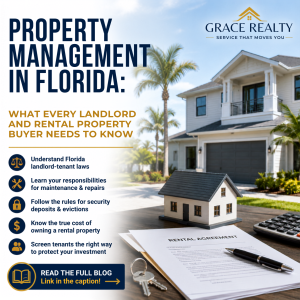
Why Florida Is Such a Strong Rental Market Right Now
Florida’s rental market is driven by something simple: people keep moving here.
The state has been adding new residents consistently for years. Young professionals, retirees, remote workers, families relocating from the Northeast and Midwest, they all need somewhere to live, and a large number of them rent before they buy or choose to rent long term.
In the Tampa Bay area specifically, rental demand across Dunedin, Clearwater, Tampa, and St. Petersburg has remained strong even as the broader real estate market has shifted. Vacancy rates in well-located properties stay low. Rents have grown meaningfully over the past several years. And the pipeline of new residents shows no signs of slowing down.
For landlords and rental property buyers, that’s a favorable environment. But favorable conditions don’t manage your property for you.
The Basics of Property Management Every Florida Landlord Should Understand
Your Lease Agreement Is Your Foundation
In Florida, a lease agreement is a legal document. What you put in it, and what you leave out, determines how protected you are if something goes wrong.
Florida law gives landlords and tenants specific rights and responsibilities. Your lease should clearly cover the rent amount and due date, the late fee policy, the security deposit terms, the maintenance responsibilities for both parties, the rules around pets, smoking, and subletting, and the conditions under which you can enter the property.
A poorly written lease creates ambiguity. Ambiguity creates disputes. Use a lease that’s been reviewed against current Florida landlord-tenant law, or work with a property management company that handles this as part of their service.
Security Deposits in Florida Have Specific Rules
Florida law is very specific about how landlords handle security deposits. You are required to hold the deposit in a separate account, notify the tenant in writing within 30 days of receiving it, and follow a strict process if you intend to make any deductions when the tenant moves out.
If you don’t follow the process correctly, you could lose your right to make deductions at all, even if the tenant caused real damage. This is one of the areas where new landlords most commonly make expensive mistakes.
Florida Has a Defined Process for Evictions
Nobody buys a rental property hoping to evict a tenant. But it happens, and in Florida there is a legal process that must be followed precisely.
The most common type of eviction in Florida starts with a three-day notice for non-payment of rent. If the tenant doesn’t pay or vacate within that window, you can file for eviction with the county court. The process typically takes several weeks when handled correctly, and longer when it isn’t.
The key thing to understand is that you cannot skip steps, change locks, remove the tenant’s belongings, or shut off utilities to force a tenant out. Florida law protects tenants against those actions regardless of the circumstances, and taking them can expose you to significant legal liability.
Understanding the process before you need it is far better than learning it in the middle of a problem.
Maintenance and Habitability Are Not Optional
Florida landlords are legally required to maintain their rental properties in a habitable condition. That means functioning plumbing, working heat and air conditioning, a structurally sound building, and a pest-free environment.
When a tenant reports a maintenance issue, you are expected to respond within a reasonable timeframe. What’s reasonable depends on the nature of the issue, a broken air conditioner in a Florida summer is a much more urgent matter than a slow-draining sink.
Having a reliable network of contractors, plumbers, electricians, and HVAC technicians before you need them is one of the most practical things a Florida landlord can do. Scrambling to find someone when a tenant has no hot water is not a situation you want to be in.
The Real Cost of Owning a Rental Property in Florida
One of the most common mistakes new rental property buyers make is underestimating the true cost of ownership. The mortgage payment is just the beginning.
Here’s what a realistic cost picture looks like for a Florida rental property:
Property taxes in Florida vary significantly by county and property value, but they are a real and ongoing expense. If you’re buying in Pinellas County, for example, budget accordingly and verify the current tax assessment before you close.
Homeowner’s insurance in Florida has become one of the most significant costs for property owners in recent years. The insurance market has gone through substantial changes, and premiums, particularly in coastal areas, reflect that. Always get accurate insurance quotes before you finalize your numbers on any rental property purchase.
HOA fees apply to many Florida properties and must be factored into your monthly cash flow calculation. Some HOAs also have restrictions on renting, minimum lease periods, or approval requirements for tenants. Read the HOA documents carefully before you buy.
Vacancy periods are real. Even in a strong rental market, properties sit vacant between tenants. A conservative approach is to budget for one month of vacancy per year when running your numbers.
Maintenance and repairs should be budgeted at roughly one to two percent of the property’s value per year. Some years you spend less. Some years the HVAC goes out. Budgeting for it in advance means you’re never caught off guard.
When you account for all of these costs honestly, the cash flow picture may look different than it did at first glance. That’s not a reason to avoid rental properties, it’s a reason to run your numbers carefully and buy the right property at the right price.
Self-Managing vs. Hiring a Property Management Company
Every landlord eventually faces this question: do I manage this myself, or do I hire someone?
Both approaches work. The right answer depends on your situation, your time, and your proximity to the property.
Self-managing makes the most sense when you live close to the property, you’re comfortable handling tenant communication and maintenance coordination, you have time to respond to issues promptly, and you want to keep management costs as low as possible. It requires real time and real attention, but many landlords do it successfully.
Hiring a property management company makes sense when you own multiple properties, you live far from the rental, you don’t want to deal with the day-to-day responsibilities, or you simply want a professional handling tenant screening, leases, maintenance, and rent collection on your behalf.
A good property management company in Florida typically charges between 8 and 12 percent of monthly rent, plus fees for tenant placement and other services. That cost should be factored into your cash flow analysis from the beginning, not added as an afterthought.
What you get in return is time, expertise, and a buffer between you and the inevitable challenges of managing tenants and properties. For many landlords, especially those with busy lives or multiple properties, that tradeoff is well worth it.
Tenant Screening Is the Most Important Thing You Do as a Landlord
No aspect of property management has a bigger impact on your experience as a landlord than who you put in your property.
A great tenant pays on time, takes care of the property, communicates clearly, and renews their lease. A problematic tenant can cost you months of lost rent, thousands in repairs, and significant legal fees.
Thorough tenant screening should include a credit check, rental history verification, employment and income verification, and personal references. In Florida, you must apply your screening criteria consistently and in compliance with fair housing laws.
Having clear, written screening criteria before you start accepting applications protects you legally and ensures you’re making objective decisions based on qualifications rather than instinct.
What Buyers Should Ask Before Purchasing a Florida Rental Property
If you’re in the process of buying a property with the intention of renting it out, here are the questions that matter most before you close:
What are comparable properties renting for in this neighborhood right now? This is your starting point for any cash flow analysis.
Does the HOA allow rentals, and are there any restrictions on lease length or tenant approval? Some communities have strict rules that significantly affect your ability to rent.
What is the current condition of the major systems, HVAC, roof, plumbing, electrical? The cost of replacing any of these shortly after purchase can eliminate months or years of cash flow.
Are there any existing tenants, and if so, what are the terms of their current lease? Buying a property with tenants in place has advantages and complications. Know exactly what you’re inheriting.
What does the insurance market look like for this specific property and location? In Florida, this question matters more than it does in most other states.
Working With a Property Management Team That Knows Florida
Florida’s landlord-tenant laws, insurance landscape, HOA environment, and rental market dynamics are specific enough that working with people who genuinely know the local market makes a real difference.
Grace Realty & Property Management has been helping buyers, investors, and landlords navigate the Tampa Bay area and Florida Gulf Coast for years. Whether you’re buying your first rental property, expanding a portfolio, or looking for professional management of a property you already own, having the right team behind you changes the experience entirely.
If you have questions about buying a rental property in the Tampa Bay area or about property management in Florida, we’d love to have a conversation. Contact us today we’re here to help!