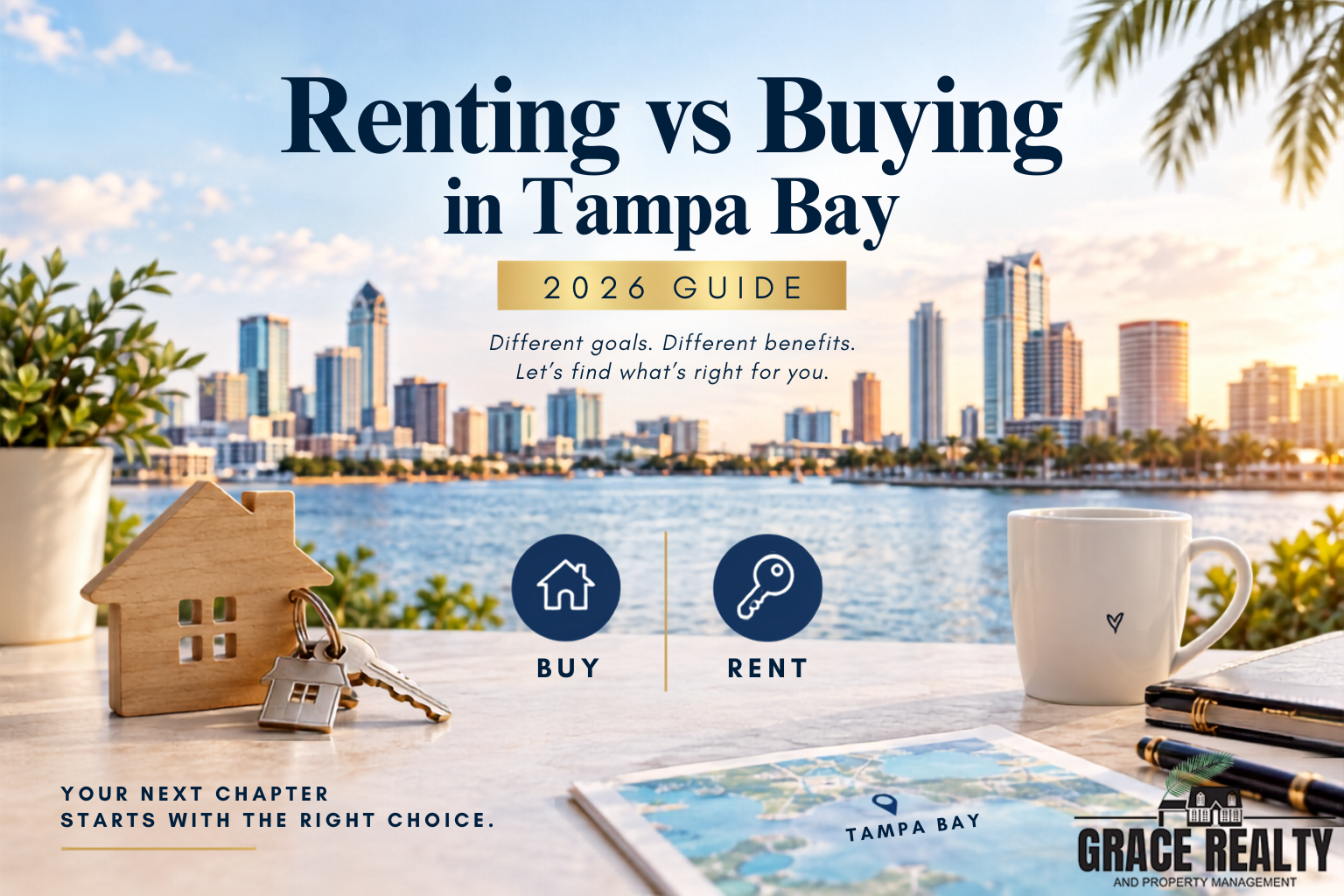

You’ve probably run the numbers in your head a dozen times. Keep renting and stay flexible, or buy and start building equity.
Renting vs buying in Tampa Bay isn’t a one-size-fits-all answer. It depends on how long you plan to stay, what you can comfortably afford, and how the local market is actually behaving right now.
Let’s walk through the real factors, not just the surface-level math, so you can make the call with confidence.
The Monthly Payment Isn’t the Whole Story
It’s tempting to compare rent and a mortgage payment side by side and call it a day. But that comparison misses a lot.
A mortgage payment builds equity over time. Rent doesn’t. On the other hand, buying comes with costs renting doesn’t, property taxes, homeowners insurance, maintenance, and closing costs upfront.
Before comparing numbers, it helps to see what buying could look like in your budget using current listings rather than rough estimates.
How Long You Plan to Stay Changes the Math Completely
This is the single biggest factor in the renting vs buying decision, and it’s the one people skip most often.
Buying a home involves upfront costs, closing fees, moving expenses, possible repairs, that take time to recover through equity growth. If you’re planning to stay in Tampa Bay for less than two or three years, renting often makes more financial sense, since you may not stay long enough to offset those upfront costs.
If you’re planning to put down roots for five years or more, buying tends to build meaningfully more long-term value, especially as you pay down principal and the home appreciates.
What Renting Offers That Buying Doesn’t
Renting isn’t just a fallback option. It comes with real advantages depending on your situation.
Flexibility is the biggest one. If your job might relocate you, or you’re still deciding which Tampa Bay neighborhood fits your lifestyle, renting for a year first can save you from buying in the wrong spot.
Renting also means no responsibility for maintenance, repairs, or unexpected costs like a failing AC unit or roof damage after a storm. For some renters, that predictability is worth more than building equity right away.
What Buying Offers That Renting Doesn’t
Buying builds equity with every mortgage payment, which is money that comes back to you later, unlike rent.
Florida also offers a homestead exemption that reduces the taxable value of a primary residence, which can meaningfully lower your property tax bill once you own. And once you’re in a fixed-rate mortgage, your principal and interest payment stays stable, while rent tends to increase year over year in most markets.
For buyers planning to stay long-term, that stability often outweighs the added responsibility of homeownership.
Factor In Florida-Specific Costs Before Deciding
A few Florida-specific costs matter more here than in many other states.
Homeowners insurance tends to run higher due to hurricane risk, and that cost should be part of your buying math from day one. Flood zone status also affects both insurance requirements and overall risk, so it’s worth checking before you fall in love with a specific home.
None of this makes buying a bad move. It just means the true cost of owning in Florida includes a few line items that renters don’t have to think about.
A Simple Way to Think It Through
Ask yourself these questions honestly:
- How long do I realistically plan to stay in this area? Under three years often favors renting.
- Do I have savings beyond the down payment for closing costs and repairs? Buying without a cushion adds stress fast.
- Am I still deciding which neighborhood fits me? Renting first can prevent a costly mistake.
- Is my income stable enough for a long-term commitment? Buying works best with financial steadiness.
There’s no universally right answer here, only the one that fits your specific timeline and finances.
Frequently Asked Questions
Is it cheaper to rent or buy in Tampa Bay right now? It depends on how long you plan to stay and current mortgage rates. Renting is often cheaper short-term, while buying tends to build more value if you stay five years or longer. Comparing current listings against local rental rates gives the clearest picture for your specific situation.
How long should I plan to stay before buying makes sense? Most financial guidance suggests staying at least three to five years to offset closing costs and other upfront expenses through equity growth and appreciation. Shorter timelines often favor renting instead.
Does Florida’s homestead exemption apply if I rent instead of buy? No. The homestead exemption only applies to a primary residence you own, which is one of the financial advantages of buying over renting for long-term Florida residents.
What upfront costs should I expect when buying instead of renting? Beyond your down payment, expect closing costs of roughly 2% to 5% of the purchase price, plus moving expenses and a cushion for early repairs. Renters typically only pay a security deposit and first month’s rent upfront.
Should I rent for a year before buying in Tampa Bay? If you’re new to the area or unsure which neighborhood fits your lifestyle, renting first can help you avoid buying in the wrong location. It’s a reasonable strategy, especially for families relocating from out of state.
Ready to Compare Your Real Numbers?
Renting and buying both make sense in different situations. The key is running your actual numbers instead of relying on general rules of thumb.
Browse homes currently for sale in Tampa Bay, check out more Tampa Bay buyer and renter resources on our blog, or talk to an agent about your specific numbers today. The team at Grace Realty is here to help you make the decision that actually fits your life.