
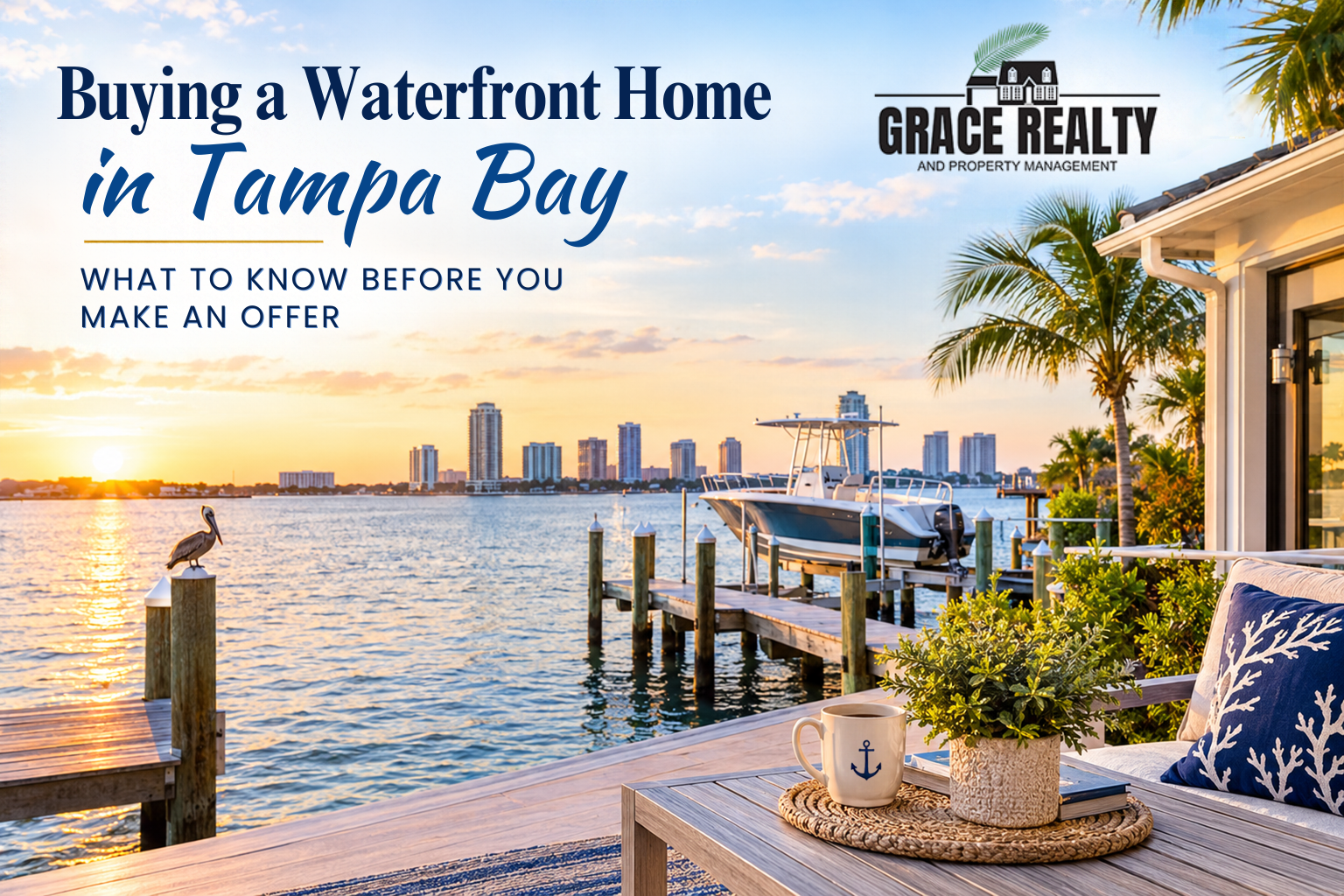

Picture your morning coffee on a dock. Pelicans glide past. The water is calm and the sun is just coming up.
That is the dream behind buying a waterfront home in Tampa Bay. It is a great dream, and it is very doable.
But waterfront living in Florida comes with a few extra steps. Flood zones, insurance and inspections can change your monthly budget fast. The good news is that you can plan for all of it.
This guide walks you through what to check, what to ask and where buyers slip up. It works whether you are a first-time buyer, an investor or a family moving to Florida. If you want to see what is on the market as you read, browse our Tampa Bay homes for sale.
Why Tampa Bay Waterfront Homes Are So Popular
Tampa Bay offers a lot of water in a small area. You can choose a bayfront home, a canal home with Gulf access, or a quiet spot on a creek, lake or river.
Many buyers fall for the lifestyle first. Boating, fishing, paddleboarding and sunset views are right outside the door.
Others see the investment side. Waterfront homes are limited in supply, so they often hold their appeal over time. Some owners also earn strong rental income.
Still, a beautiful view does not tell you the full story. Let’s look at the details that matter.
Step 1: Know Your Flood Zone
Start here. Every property in the U.S. sits in a flood zone, and that zone affects your insurance and your mortgage.
FEMA publishes flood maps that show risk levels. You can look up any address on the FEMA Flood Map Service Center in a few minutes.
Here is the simple version:
- Zones A and V are high-risk areas. Lenders usually require flood insurance for federally backed mortgages here.
- Zone X is lower risk. Flood insurance is often optional, but it can still be smart.
Remember that flooding can happen outside high-risk zones too. Heavy rain and storm surge do not always follow the map.
Pro tip: Ask the seller for an elevation certificate. It shows how high the home sits compared to expected flood levels. Insurers use it to set your price.
Step 2: Get Insurance Quotes Before You Fall in Love
Many buyers wait too long on this step. Please don’t.
Standard homeowners insurance does not cover flood damage. You need a separate policy, either through the National Flood Insurance Program or a private insurer.
You will also need wind coverage. In Florida, many policies have a separate hurricane deductible. It is often a percentage of your home’s insured value, not a flat dollar amount.
Here is why that matters. A 2% deductible on a large home can mean a big out-of-pocket cost after a storm. Know that number before you buy.
Also keep in mind that new flood policies often have a waiting period before coverage begins. Plan ahead so you are not caught uncovered at closing.
Get quotes for both flood and wind coverage while you are still choosing between homes. The Florida Office of Insurance Regulation is a helpful place to learn how coverage works in the state. The results can change which home makes sense.
Step 3: Order the Right Inspections
A standard home inspection is a great start. For Florida waterfront homes, you will usually want more.
Ask your agent about these:
- Wind mitigation inspection. It checks roof shape, window protection and roof-to-wall connections. A good report can lower your insurance premium.
- 4-point inspection. Insurers often request it for older homes. It reviews the roof, electrical, plumbing and HVAC.
- Roof inspection. Roof age is a major factor for Florida insurers.
- Seawall and dock inspection. Repairs can be costly, so have a pro check for cracks, leaning and erosion.
- Termite and moisture checks. Humid coastal air can hide problems.
These reports also give you negotiating power. If the seawall needs work, you can ask for a repair or a price adjustment.
Prefer fewer surprises? Our new construction homes page is worth a look. Newer homes are built to current building codes, which can help with insurance.
Step 4: Understand the Seawall, Dock and Water Rules
Waterfront homes often come with extras. A seawall, boat dock or boat lift can add value. They can also add upkeep.
Before you buy, ask a few questions:
- Who owns and maintains the seawall?
- Do the dock and lift have the right permits?
- Is the water deep enough for your boat?
- Is there a bridge or height limit between the home and open water?
- Are there HOA or city rules about docks and lifts?
Your local city or county office can confirm permit details. For Pinellas properties, start with Pinellas County and your city’s building department.
Step 5: Review Seller Disclosures
Florida sellers must disclose known material defects. Flood history is an important part of that, and recent Florida rules added specific flood disclosure requirements for sellers. Ask your agent and attorney what applies to your deal.
Read the paperwork closely. Ask whether the home has ever taken on water, even a little. Ask about past insurance claims too.
If anything is unclear, ask for it in writing.
Step 6: Build the Full Monthly Budget
A waterfront mortgage payment is only part of the cost. Add these to your budget:
- Homeowners and wind insurance
- Flood insurance
- Property taxes
- HOA fees, if any
- Seawall, dock and landscaping upkeep
- Hurricane prep, such as shutters or window protection
Run the numbers early. A home that looks affordable at first can feel very different once insurance is added.
Tips for Different Types of Buyers
First-time home buyers: Start with a pre-approval and get insurance quotes early. Lower-risk zones can make your first purchase easier on the budget. The NAR buyer resources can help you learn the basics.
Families relocating to Florida: Visit the area in person if you can. Drive the neighborhood after a rainstorm and talk to neighbors about their experience.
Investors: Check short-term rental rules in the city or HOA first. Strong views mean little if rentals are restricted.
Sellers of waterfront homes: Gather your elevation certificate, wind mitigation report and permit records before listing. Buyers trust prepared sellers.
Work With a Local Agent Who Knows the Water
Every Tampa Bay neighborhood is different. One street may sit at a higher elevation than the next. One canal may have easy Gulf access while another has a low bridge.
A local agent helps you spot these details early. At Grace Realty, our team can help you compare areas, review disclosures and plan for the full cost of ownership. You can meet our team to see who you would be working with.
Ready to start? Check out our featured waterfront listings, or talk with a Grace Realty agent about your goals.
For more tips, read our more Florida real estate guides. You can also explore Florida Realtors for statewide market information.
This article is for general information only and is not legal, tax or insurance advice. Confirm details with licensed professionals.
Frequently Asked Questions
Do I need flood insurance to buy a waterfront home in Tampa Bay?
If the home is in a high-risk flood zone and you use a federally backed mortgage, your lender will usually require it. In lower-risk zones it may be optional, but it is still worth considering because flooding can happen anywhere.
How do I find out a home’s flood zone?
Enter the address on the FEMA Flood Map Service Center. You can also ask your agent or insurance agent to confirm it.
Is waterfront insurance more expensive in Florida?
Often, yes. Cost depends on elevation, roof age, construction type and distance from the water. Getting quotes early helps you compare homes fairly.
What inspections should I order for a Florida waterfront home?
Most buyers order a general inspection, a wind mitigation inspection and a roof inspection. Older homes may also need a 4-point inspection, plus a seawall and dock check.
Can I use a waterfront home as an investment property?
Yes, many investors do. Check local short-term rental rules, HOA limits and insurance costs first, since these can change your returns.
Are waterfront homes in Tampa Bay a good buy for first-time buyers?
They can be, if the numbers fit your budget. Many first-time buyers do best by comparing a few flood zones and getting full insurance quotes before choosing.