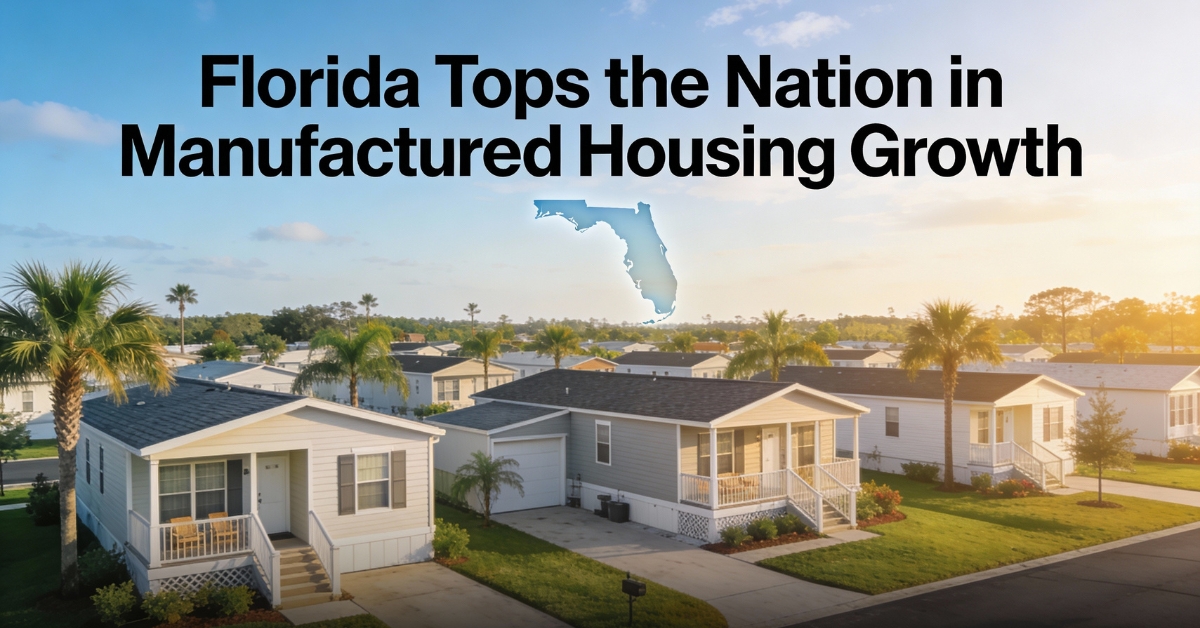

Florida has once again taken the top spot in the United States for manufactured housing, according to a new report from StorageCafe. With more than 824,000 manufactured homes across the state, Florida now leads the nation by a wide margin. These homes make up about 8% of all housing in Florida, a figure well above the national average.
As housing prices continue to rise and affordability becomes a growing concern, manufactured housing is playing a much larger role in helping people find attainable paths to homeownership. For many Floridians, especially first-time buyers and retirees, manufactured homes are no longer a backup option—they are the main solution.
Why Manufactured Housing Is Growing So Fast in Florida
Florida’s housing market has changed dramatically over the past decade. Population growth, increased demand, and rising construction costs have pushed traditional home prices out of reach for many residents. In this environment, manufactured housing has gained momentum.
One of the biggest reasons is cost. According to the report, a new manufactured home in Florida costs around $135,000 on average, which is roughly one-third the price of a site-built home in many parts of the state. That price difference can mean the difference between renting indefinitely and owning a home.
Manufactured homes also take less time to build, use fewer materials, and offer modern layouts and energy-efficient features. For buyers looking for practicality rather than luxury, the appeal is clear.
Florida Leads the Nation by the Numbers
The StorageCafe analysis shows just how dominant Florida is in the manufactured housing market. While the United States has about 7.9 million manufactured homes, representing 5.4% of all housing nationwide, Florida alone accounts for more than 824,000 units.
That concentration puts Florida firmly in first place, ahead of other large Sunbelt states. The report also notes that manufactured housing is especially common in regions where affordability pressures are strongest, and Florida fits that profile perfectly.
Cities Where Manufactured Housing Thrives
Some Florida cities stand out even more than the state as a whole.
Largo: A National Standout
Largo holds a unique distinction—it has the highest share of manufactured homes of any city in the country. About 28% of all housing units in Largo are manufactured homes. This reflects decades of development and a community structure that has fully integrated manufactured housing into the local market.
Jacksonville: Large-Scale Growth
Jacksonville is another key market, with more than 15,000 manufactured homes. Its large land area, suburban expansion, and growing population make it well suited for manufactured housing communities.
These cities show that manufactured housing can succeed in both smaller cities and major metropolitan areas when local conditions support it.
The Sunbelt’s Role in Manufactured Housing
Florida’s success is part of a larger national trend. Manufactured housing is most common in Sunbelt states, where population growth remains strong and housing affordability is a persistent challenge.
States across the South and Southwest benefit from lower land costs and development patterns that make manufactured housing more feasible. In contrast, high-density urban regions and states with strict zoning rules tend to have fewer manufactured home communities.
Florida’s mix of demand, climate, and development flexibility has made it a natural leader.
A Key Solution to the Housing Affordability Crisis
The report makes it clear that manufactured housing is no longer a niche segment of the market. It has become a critical tool for addressing affordability, especially in states like Florida where housing costs continue to rise faster than incomes.
Manufactured homes offer a realistic entry point into homeownership. For retirees on fixed incomes, they provide an affordable way to downsize. For working families, they offer stability and ownership at a price point that traditional homes often cannot match.
As policymakers and housing experts search for solutions to the national housing shortage, manufactured housing is increasingly part of the discussion.
Challenges That Still Exist
Despite its growth, manufactured housing also faces challenges.
One of the biggest concerns involves land-lease communities, where homeowners own their homes but rent the land underneath them. Rising lot rents can create financial strain, especially for seniors.
There are also concerns about storm safety, particularly in hurricane-prone Florida. Older manufactured homes may not meet current building standards, though newer homes are built under stricter codes and can perform much better during severe weather.
Finally, zoning restrictions and outdated perceptions continue to limit where manufactured housing can be built, slowing expansion in some areas.
What the Future Looks Like for Florida
Looking ahead, Florida’s manufactured housing market is expected to continue growing. Population increases, high home prices, and limited supply of affordable housing all point in the same direction.
Future growth will likely depend on:
- Updating zoning and land-use policies
- Encouraging modern, storm-resistant construction
- Protecting residents in land-lease communities
- Including manufactured housing in long-term housing plans
Florida’s experience shows that manufactured housing can play a meaningful role in solving housing challenges when supported by thoughtful policies.
Final Thoughts
Florida’s top ranking in manufactured housing is more than just a statistic. It reflects how the state is adapting to changing housing needs and affordability pressures. With more than 824,000 manufactured homes, Florida has become the national leader in offering lower-cost homeownership options.
As housing costs continue to rise across the country, Florida’s manufactured housing market offers a clear example of how alternative housing solutions can make a real difference.
Frequently Asked Questions (FAQ)
Why is manufactured housing so popular in Florida?
High housing costs, strong population growth, and demand from retirees and first-time buyers have made manufactured housing a practical option.
How many manufactured homes are in Florida?
Florida has more than 824,000 manufactured homes, the most of any state.
What percentage of Florida’s homes are manufactured?
About 8% of Florida’s total housing stock consists of manufactured homes.
How much does a manufactured home cost in Florida?
On average, a new manufactured home costs around $135,000, significantly less than a site-built home.
Which Florida city has the highest share of manufactured homes?
Largo has the highest share in the nation, with 28% of its housing made up of manufactured homes.
Are manufactured homes safe in hurricanes?
Newer manufactured homes are built to stricter safety standards and perform better in storms, while older units may need upgrades.
Is manufactured housing growing nationally?
Yes. The U.S. has about 7.9 million manufactured homes, making up 5.4% of all housing, with Sunbelt states leading growth.