
Florida’s real estate market is often discussed in terms of rising prices, shrinking inventory, and intense competition among buyers. Yet behind the headlines about luxury condos and fast-selling suburban homes, a quieter but deeply important movement is underway: the push for workforce and affordable housing that strengthens communities rather than displacing them. One recent example that highlights this shift is the story of Army veteran and real estate developer Miles Alexander III, founder and managing partner of Alexander Goshen, a Fort Lauderdale–based development firm.
This article explores Alexander’s journey, his development philosophy, and why his work matters for homebuyers, investors, and anyone following Florida real estate trends.
From Foster Care and Military Service to Real Estate Development
Miles Alexander III’s path to real estate development was not a traditional one. He spent much of his childhood moving through foster homes in Philadelphia and New Jersey, an experience that shaped his understanding of stability, housing, and community from an early age. After graduating high school in 2005, Alexander joined the U.S. Army, where he was stationed at Fort Lewis, Washington, and advanced from infantryman to ranger.
Alexander planned to make the military his long-term career. However, while serving in Iraq, he suffered injuries that led to a 100% medical discharge. Returning to civilian life forced him to rethink his future. That transition became a turning point.
Real estate had interested Alexander since his teenage years, and after leaving the Army, he decided to pursue it seriously. Initially, he thought about becoming a real estate agent, but he quickly realized that sales alone were not where his strengths or interests lay. Instead, he began learning the business from the ground up.
Using his savings, Alexander started purchasing tax liens, foreclosures, and distressed single-family homes, rehabbing them, and selling them. These early projects gave him hands-on experience and a practical education in construction costs, market demand, and risk management.
Learning the Business — and the Importance of Equity
As his experience grew, Alexander moved beyond renovations and into single-family construction within subdivisions. To maintain control over quality and costs, he earned his own general contractor’s license, an uncommon step that gave him deeper insight into the entire development process.
A key moment in his career came when he met an apartment developer at a real estate conference. Alexander offered to estimate a construction bid and ended up saving the developer a significant amount of money. This led to a partnership and exposure to larger, multifamily projects.
However, Alexander noticed something important: while he was doing much of the work, others were accumulating most of the equity. That realization pushed him to change course.
Rather than remaining a partner without ownership control, Alexander began buying apartment complexes himself. Over time, this evolved into ground-up development of large-scale projects, the focus of his work today.
Finding a Niche in Workforce and Affordable Housing
Alexander’s first major ground-up development was a 176-unit workforce housing project in Hampton, Georgia, completed in 2017. The project took longer than expected, but it confirmed that large-scale housing development — particularly for working families — was the direction he wanted to pursue.
Since then, Alexander has been intentional about choosing a niche that many developers avoid. Affordable and workforce housing is often:
- Politically complex
- Highly regulated
- Slower to deliver returns than luxury development
Despite these challenges, Alexander sees this segment as where the greatest need and long-term opportunity exists.
Today, approximately 75% of Alexander Goshen’s work focuses on workforce and affordable housing. Over the past 12 years, the company has delivered more than 2,600 housing units nationwide, with another 1,500 units currently in the development pipeline.
Alexander describes his approach as “impact development” — real estate projects designed not just to generate profit, but to create lasting benefits for residents and surrounding neighborhoods.
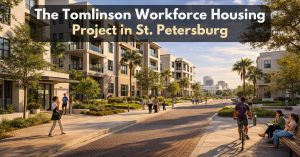
The Tomlinson Workforce Housing Project in St. Petersburg
One of Alexander Goshen’s most notable current projects is the Tomlinson Workforce Housing Project in St. Petersburg, Florida. This development is a public-private partnership with the local school district, aimed at providing attainable housing for teachers and school district staff.
The project involves the adaptive reuse of a former school site, transforming it into a 14-story, 264-unit workforce housing development. Beyond the number of units, the project stands out because of its collaborative structure and its focus on supporting essential workers who are increasingly priced out of the communities they serve.
Alexander sees Tomlinson as a model that could be replicated across Florida. With many school districts and public agencies owning underutilized land, similar partnerships could help address housing shortages without relying solely on new land acquisition.
Projects like this also demonstrate how real estate development can directly support community stability — when teachers, nurses, and public employees can afford to live near their workplaces, neighborhoods benefit as a whole.
Rethinking Neighborhood Design: Pocket Communities
In addition to large multifamily developments, Alexander Goshen is exploring pocket communities and clustered housing concepts, particularly in Central Florida.
Pocket communities are smaller-scale neighborhoods that emphasize:
- Walkability
- Shared green spaces
- Common gathering areas
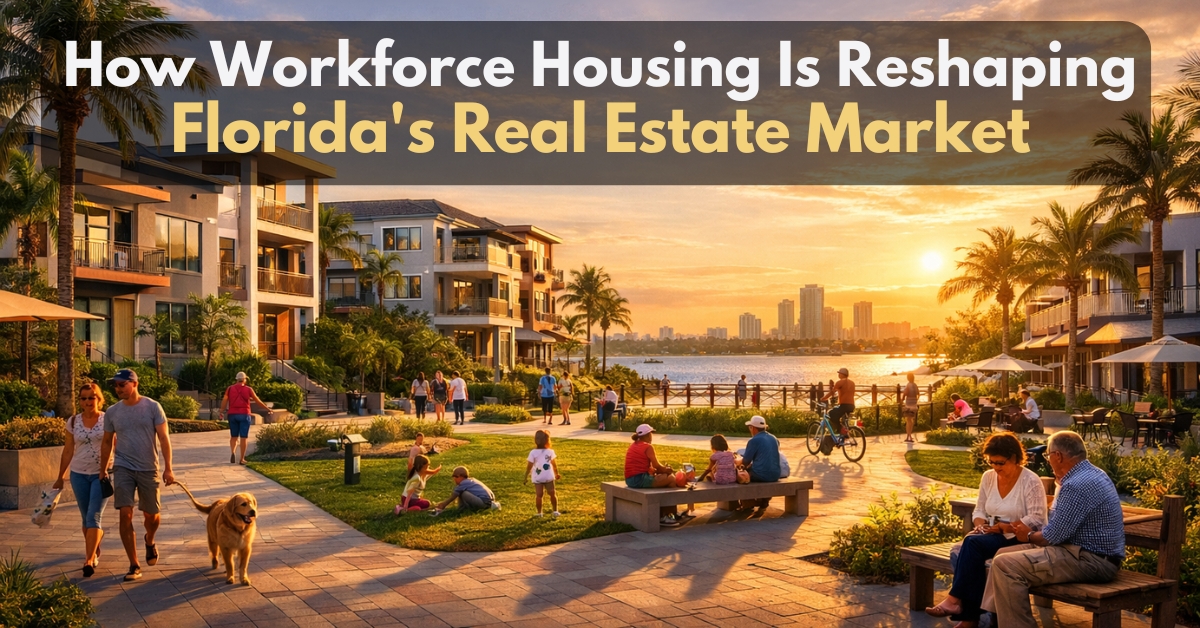
Rather than spreading homes far apart or prioritizing car-centered design, these communities might feature a dozen or so homes arranged around a shared courtyard, garden, or pedestrian street. Some concepts also include lifestyle programming, access to local food vendors, and educational offerings.
For Alexander, this idea is rooted in personal experience. He recalls growing up in neighborhoods where residents knew one another and children played outside together. In contrast, many modern developments isolate residents, with people moving from house to car with little interaction.
By reintroducing shared spaces and human-centered design, pocket communities aim to foster stronger social connections and healthier living environments.
What This Means for Florida Homebuyers and Sellers
Although Alexander Goshen focuses primarily on development rather than individual home sales, projects like these have broader implications for the Florida real estate market:
- Increased Housing Supply: Workforce and affordable housing developments help relieve pressure on existing inventory, which can stabilize prices over time.
- Stronger Communities: Developments designed around people — not just profit — often lead to safer, more desirable neighborhoods.
- Long-Term Value: Buyers increasingly look beyond square footage and finishes, valuing walkability, access to services, and community feel.
For sellers, these trends can also enhance property values in surrounding areas, particularly when developments improve infrastructure and neighborhood amenities.
Looking Ahead: The Future of Alexander Goshen
Alexander’s five-year goal is ambitious: 20,000 housing units under management, with a focus on master-planned, mixed-income communities that redefine what affordable living looks like in Florida and beyond.
While affordability challenges remain significant, Alexander believes the opportunity lies in rethinking how housing is built and who it is built for. His work reflects a growing recognition within the real estate industry that long-term success depends on balancing financial returns with social responsibility.
Frequently Asked Questions (FAQ)
Who is Miles Alexander III?
Miles Alexander III is an Army veteran and the founder, principal, and managing partner of Alexander Goshen, a real estate development firm based in Fort Lauderdale, Florida.
What type of real estate does Alexander Goshen develop?
The firm specializes in workforce and affordable housing, along with mixed-income and community-focused developments.
How many housing units has Alexander Goshen developed?
The company has delivered more than 2,600 units nationwide, with approximately 1,500 additional units in the development pipeline.
What is the Tomlinson Workforce Housing Project?
It is a 264-unit workforce housing development in St. Petersburg, Florida, created through a public-private partnership with the local school district to provide housing for teachers and staff.
What are pocket communities?
Pocket communities are small-scale neighborhoods designed around shared green spaces and walkability, encouraging stronger social interaction among residents.
Why is workforce housing important in Florida?
Workforce housing helps essential workers afford to live near their jobs, supports economic stability, and reduces pressure on the broader housing market.
Reference
This blog is based on information published by Florida Trend in the article “Mission BUILT: Army veteran Miles Alexander is taking on Florida’s most urgent housing challenges”, written by Nancy Dahlberg and published in January 2026. The original article can be found on the Florida Trend website.