

Introduction: The Rule Has Changed — Insurance Is Now the Deal
Forget interest rates. Forget down payments. Forget bidding wars.
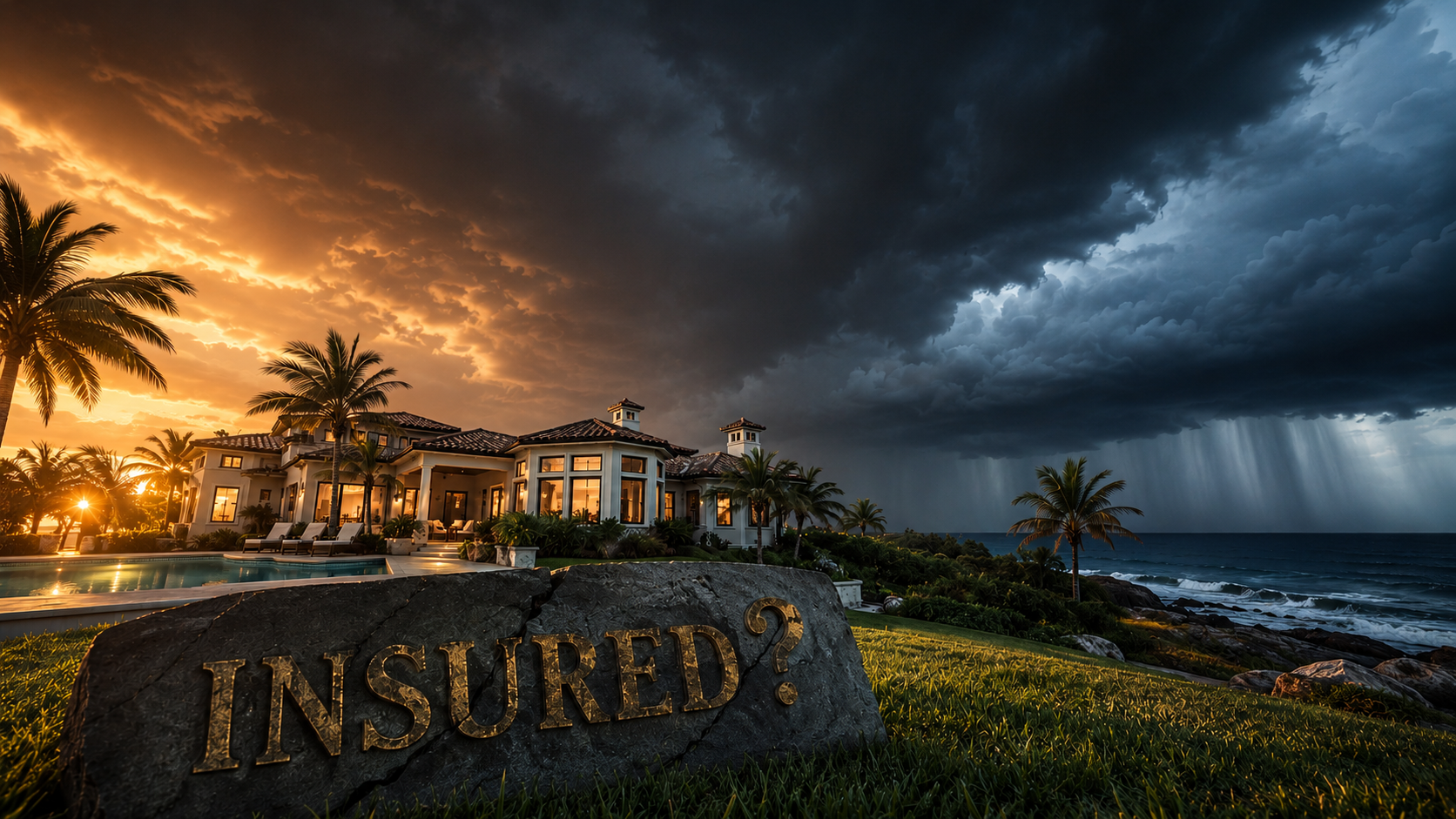
In 2026, there is one factor quietly killing Florida real estate deals before they ever reach the closing table — and most buyers and sellers don’t even see it coming until it’s too late.
Homeowners insurance.
If you’re buying, selling, or investing in Florida property right now, the single most important question you need to ask isn’t “What’s the listing price?” It’s: “Can this home even be insured — and at what cost?”
This isn’t an exaggeration. Across the state, from Cape Coral to Miami Beach to Jacksonville, insurance has become the invisible gatekeeper of every real estate transaction. It determines which homes sell. Which ones sit. And which buyers walk away from deals they were ready to sign.
Here’s everything you need to know — in plain, honest terms.
Why Insurance Became the Dominant Force in Florida Real Estate
Florida didn’t wake up one morning with an insurance problem. It built one — slowly, then all at once.
Years of catastrophic hurricanes (Ian, Helene, Irma), runaway litigation, reinsurance cost spikes, and a wave of insurance company insolvencies created the perfect storm. Carriers fled the state. Those that stayed started raising premiums at rates that shocked even seasoned real estate agents.
The result? Insurance stopped being a line item in a budget — it became a dealbreaker.
Major private insurers pulled back aggressively. Homeowners flooded into Citizens Property Insurance, the state’s insurer of last resort, which at its peak was holding over 1.4 million policies — a number it was never designed to carry. Underwriting rules tightened overnight. Roofs older than 15 years became radioactive on the open market. Four-point inspections started rejecting homes that would have qualified easily five years ago.
And buyers? They started learning — sometimes mid-transaction — that the home they loved wasn’t just expensive to insure. It was nearly impossible to insure.
The Real Numbers: What Florida Homeowners Are Actually Paying
Let’s put concrete numbers on the table, because this is where the story truly hits home.
The average Florida homeowner is now paying somewhere between $3,800 and $7,200 per year for a standard homeowners insurance policy — depending on location, home age, and coverage level. To put that in perspective, the national average sits around $1,900 to $2,000 annually.
That means Florida homeowners are paying two to four times more than the rest of the country.
In coastal counties — Lee, Collier, Pinellas, Miami-Dade, Broward — premiums on single-family homes regularly land between $9,000 and $18,000 per year. Older properties near the water? Some are being quoted at $20,000 or more annually. Separate from that, FEMA’s Risk Rating 2.0 has sharply increased flood insurance costs, which is a completely separate policy that many buyers don’t realize they’ll need.
For a buyer on a $400,000 home with a 7% mortgage, adding $700 to $1,500 per month in insurance costs doesn’t just stretch a budget — it breaks it entirely.
This is why deals are dying. Not because buyers aren’t interested. Because the true monthly cost of ownership is far higher than the mortgage alone ever suggested.
How Insurance Is Reshaping Buyer Behavior in 2026
Smart buyers in Florida have fundamentally changed how they approach home searches. They’re no longer starting with square footage or school districts. They’re starting with insurability.
Here’s what the new buyer checklist looks like:
Roof age is everything. A home with a roof over 15 years old is now one of the most difficult properties to insure in Florida. Buyers are factoring in the full cost of roof replacement — often $15,000 to $40,000 — as a negotiation chip or a deal-killer before they even make an offer.
Post-2002 construction is a premium. Homes built after Florida adopted stricter building codes in 2002 qualify for significantly lower insurance premiums. Buyers are actively filtering their searches with this in mind.
Wind mitigation reports are non-negotiable. A professional wind mitigation inspection documents hurricane-resistant features — roof shape, shutter type, wall connections. Homes that score well can see insurance discounts of 20% to 40% or more. Sellers who have this report ready are closing faster.
Flood zone research happens on day one. No longer something buyers think about at the end. Whether a home is in a FEMA Special Flood Hazard Area (SFHA) is now evaluated before a second showing is even scheduled.
Four-point inspections are part of every offer. These inspections — covering the roof, electrical, plumbing, and HVAC systems — are what insurers use to decide if they’ll even write a policy. Buyers are ordering them early. Sellers are getting them done before listing.
What This Means If You’re Selling a Home in Florida Right Now
If you’re selling, insurance isn’t your problem — until it becomes your buyer’s problem and kills your deal.
The homes that are selling quickly in 2026 share a few things in common: newer roofs, updated electrical and HVAC systems, documented wind mitigation features, and sellers who have proactively obtained insurance quotes that they’re willing to share with serious buyers.
The homes sitting on the market? Many are older properties with aging roofs, outdated electrical panels, or coastal locations where premiums are simply unaffordable for the average buyer with a mortgage.
Here’s a strategy smart sellers are using right now: get a wind mitigation inspection and a four-point inspection before you list. Know exactly what your insurance situation looks like. Price your home accordingly. And if you’ve got an older roof, either replace it or price in the cost transparently — because buyers will discover it regardless, and a deal falling apart two weeks before closing costs you far more than a negotiated price reduction upfront.
The Good News: Florida’s Insurance Market Is Finally Stabilizing
Here’s where the story shifts from crisis to cautious optimism — and it’s important to understand what’s actually changing.
The legislative reforms passed in 2022 and 2023 are delivering measurable results. Litigation tied to insurance claims has dropped dramatically. The assignment-of-benefits abuse that weaponized claims against insurers has largely been curbed. Eighteen new insurance companies have entered the Florida market in the past 18 months, bringing competition and capacity that simply didn’t exist a few years ago.
Citizens Property Insurance — the state-backed insurer of last resort — has dropped from a peak of 1.42 million policies in October 2023 to approximately 336,000 by early 2026. And for the first time since 2015, Citizens policyholders are seeing rate decreases, averaging 8.7% statewide, with larger reductions in hard-hit areas like Broward County (14.1%) and Miami-Dade (13.9%).
Some private carriers are filing for rate reductions of 10% to 11%. More underwriting flexibility is returning to the market. Homes that would have been declined outright two years ago are getting coverage again.
The honest forecast from insurance experts: premiums are likely to flatten throughout the rest of 2026, with modest decreases possible in 2027 and 2028 — particularly for homes with newer roofs, hurricane mitigation features, and clean claims histories. Older coastal properties will take longer to see meaningful relief.
Florida’s insurance market is still expensive by national standards. But the direction has changed. And in real estate, direction matters enormously.
The Rise of Cash Buyers: Insurance’s Unintended Winner
There is one group of buyers for whom Florida’s insurance crisis isn’t a problem at all — cash buyers.
When a property can’t be insured, lenders won’t fund a mortgage. Full stop. But a cash buyer doesn’t need a lender’s approval. They can purchase an uninsurable property, renovate it to meet underwriting requirements, and either hold, flip, or resell it once it qualifies for coverage.
This dynamic has quietly created one of the most unusual real estate conditions in Florida history: a two-tier market. Homes that are easily insurable attract strong demand from traditional financed buyers. Homes that are difficult or impossible to insure are increasingly transacting as cash deals — often below market value.
For investors, this is significant. The spread between “insurable” and “uninsurable” properties has created real buying opportunities — particularly for those willing to replace a roof, update electrical panels, or make targeted improvements that restore a home’s insurability and, with it, its full market value.
The 5 Things Every Florida Buyer Must Do Before Making an Offer in 2026
Whether you’re buying your first home or your fifth, these five steps are non-negotiable in the current market:
1. Get an insurance quote before you fall in love with a home. Contact a local Florida insurance agent and get a preliminary quote based on the address. Do this before your emotions are invested.
2. Check the roof age and condition. Ask the seller directly. Order a roof inspection. If the roof is over 15 years old, understand what replacement will cost and factor it into your offer.
3. Order a wind mitigation inspection. This single document can save you thousands per year in premiums. It pays for itself immediately.
4. Clarify flood zone status and flood insurance cost. Don’t assume the listing agent’s characterization is complete. Go to FEMA’s Flood Map Service Center yourself and get a separate flood insurance quote.
5. Request a four-point inspection early. Don’t wait for the general inspection. A four-point inspection gives you the same view your insurer will have — and lets you catch deal-breakers before you’re two weeks from closing.
Final Word: Insurance Is the New Mortgage Math
A generation ago, buyers ran the mortgage math to figure out what they could afford. Today in Florida, that math has a new mandatory variable: insurance.
The monthly cost of homeownership here now includes your mortgage payment plus a homeowners premium that could easily add $500 to $1,500 or more to your budget. Flood insurance adds another layer. And if your property doesn’t qualify for coverage at all, no traditional path to ownership exists.
This isn’t pessimism — it’s preparation. The buyers and sellers who understand this shift aren’t just surviving the Florida market in 2026. They’re thriving in it. They’re making faster decisions, negotiating smarter, and closing deals that others let fall apart because they didn’t ask the right questions at the right time.
Florida is still one of the most desirable places to own property in the United States. The lifestyle, the economy, the tax advantages — none of that has changed. What has changed is the homework required to get here successfully.
Know your insurance. Know your roof. Know your flood zone. And work with professionals — a real estate agent and a local insurance specialist — who understand that in 2026, these two fields are no longer separate conversations.
They are the same conversation.
Was this post helpful? Share it with someone navigating the Florida market — they’ll thank you for it.