

Miami vs. Tampa vs. Orlando: Which Florida City Is Right for You?
Short answer: Miami is for ambition, nightlife, and international culture. Tampa is for balance — beach life with lower costs and a booming job market. Orlando is for families, entertainment, and the best housing value of the three. If you want to maximize your paycheck, choose Tampa or Orlando. If you want world-class culture and don’t mind paying for it, choose Miami.
Now let’s break down why — with real 2026 numbers.
Florida has been the #1 most-moved-to state for four years running, and most newcomers narrow their search to three cities: Miami, Tampa, and Orlando. They sound similar on paper — sunshine, no state income tax, growing economies — but living in each one feels completely different. This guide will help you decide which one actually fits your life.
Quick Comparison Table (2026 Data)
| Category | Miami | Tampa | Orlando |
|---|---|---|---|
| Median home price | ~$615,000 | ~$489,000 | ~$395,000 |
| Median rent (2BR) | ~$3,400 | ~$2,300 | ~$2,100 |
| Cost of living vs. US avg | +23% | +7% | +4% |
| State income tax | 0% | 0% | 0% |
| Average summer high | 90°F (humid) | 90°F (humid, breezier) | 92°F (humid, inland) |
| Beach access | On the ocean | 30 min to Gulf | 60–75 min to either coast |
| Hurricane risk | High | Moderate–High | Moderate (inland buffer) |
| Best for | Culture, nightlife, global careers | Balance, beaches, families | Families, entertainment, affordability |
| Vibe | Latin cosmopolitan metropolis | Coastal + sporty + professional | Suburban + theme parks + growing urban core |
Miami: The Ambitious, International Metropolis
Miami is not a city for people who want to slow down. It’s loud, stylish, multicultural, and expensive — a Latin American capital that happens to be in the United States.
Who thrives here: High earners in finance, tech, real estate, media, fashion, or international business. Entrepreneurs and creatives. Bilingual professionals (Spanish is functionally a second official language). Night owls. People who want their Tuesday dinner to feel like a Saturday in Manhattan.
The money reality: Miami is the most expensive major city in Florida. Median home prices hover around $615,000 citywide and dramatically higher in Miami Beach, Coconut Grove, Coral Gables, and Brickell. A 2-bedroom in a doorman building in Brickell or Edgewater easily runs $4,000–$6,000/month. Car insurance, HOA fees, and flood insurance are among the highest in the country.
What you get for the price:
- Direct beach access and some of the most beautiful waterfront in the US
- Miami International Airport (one of the best-connected in the Americas)
- A serious cultural scene: Art Basel, Wynwood galleries, world-class restaurants
- A genuinely global population and business network
- Year-round warm weather and an unmatched social energy
The downsides: Traffic is brutal. Car insurance is painful. Hurricane and flood exposure is real and insurance premiums reflect it. Schools are inconsistent outside of top districts and private options. Rent and home prices have outpaced local wages for a decade.
Best neighborhoods in Miami for relocators: Brickell (urban professionals), Coral Gables (families and upscale quiet), Coconut Grove (leafy and walkable), Miami Beach (if you want the ocean outside your door), Doral (family-friendly and newer inventory), Aventura (luxury condos + great schools).
Tampa: The Best-Balanced City in Florida
If Miami is the show-off older sibling and Orlando is the family-focused middle child, Tampa is the one who quietly has their life together. It offers beaches, real job growth, strong neighborhoods, and prices that still make sense — though that window is narrowing.
Who thrives here: Young professionals, remote workers, healthcare and finance workers, military families (MacDill Air Force Base), sports fans, investors, and anyone who wants coastal Florida without Miami prices.
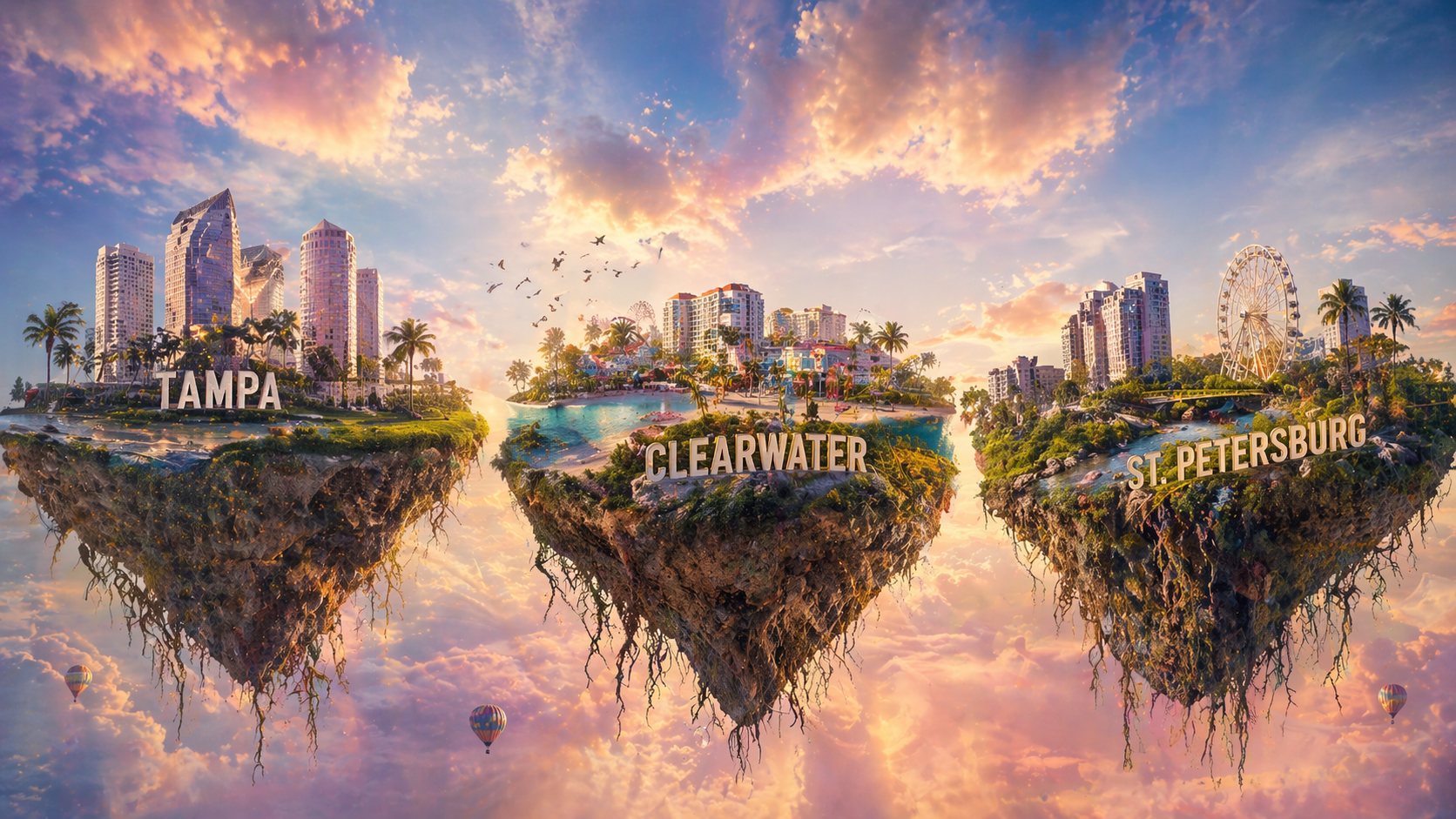
The money reality: Tampa’s median home price is around $489,000 and the broader Tampa Bay market (including St. Petersburg and Clearwater) offers significant variety. Cost of living sits about 7% above the US average, making it meaningfully cheaper than Miami and comparable to Orlando.
What you get:
- Easy access to Gulf beaches (Clearwater, St. Pete, Siesta Key)
- Three major pro sports teams (Buccaneers, Lightning, Rays)
- A fast-growing downtown (Water Street, Hyde Park, Riverwalk)
- A strong and diversifying job market (finance, healthcare, defense, tech)
- Slightly cooler coastal breezes than inland Orlando
- A family-friendly suburban ring (Carrollwood, Westchase, Wesley Chapel, Lutz)
The downsides: Flood and hurricane risk on low-lying coastal areas. Traffic has grown significantly in the last five years. Public transit is limited. Insurance is rising statewide, and Tampa is not immune.
Best neighborhoods in Tampa Bay for relocators: South Tampa (Hyde Park, Palma Ceia — classic and walkable), Westchase (family-friendly master-planned), St. Petersburg’s Old Northeast (charming historic), Wesley Chapel (newer builds, great schools), Riverview & Apollo Beach (value-driven and growing).
Orlando: The Family-First, Best-Value Florida City
Orlando is no longer “just theme parks.” It’s become one of America’s fastest-growing metros, with a booming healthcare corridor (Medical City at Lake Nona), a major tech presence, and some of the most affordable real estate in Florida’s big three.
Who thrives here: Young families, first-time homebuyers, remote workers prioritizing space over coastline, hospitality and healthcare professionals, retirees who want warmth without coastal prices, and anyone who genuinely loves having Disney and Universal 20 minutes away.
The money reality: Orlando offers the best housing value of the three cities, with a median home price near $395,000. Cost of living is just slightly above the national average. Your dollar simply goes further — especially in new-construction suburbs like Winter Garden, Lake Nona, and Horizon West.
What you get:
- The most affordable home prices of Florida’s top 3 metros
- Strong and growing job market (healthcare, aerospace, tech, tourism)
- Excellent new-construction inventory
- Family-oriented communities with great amenities
- World-class entertainment — literally in your backyard
- Easier inland weather (less direct hurricane exposure than the coasts)
The downsides: No ocean. The nearest real beaches (Cocoa, New Smyrna, Clearwater) are 60–75 minutes away. Summers are hotter and more humid than coastal Florida because there’s no sea breeze. Tourist traffic on I-4 can be a daily headache. Some areas feel homogenous and newer without established charm.
Best neighborhoods in Orlando for relocators: Winter Park (historic, walkable, upscale), Lake Nona (master-planned tech + medical hub), Winter Garden (charming downtown + family-friendly), Baldwin Park (new urbanist walkability), Horizon West (fast-growing family corridor), College Park (hip and central).
Head-to-Head: Which City Wins for Each Lifestyle?
Best for young professionals → Miami (for ambition, networking, global careers) or Tampa (for balance and affordability).
Best for families → Orlando, by a wide margin. Tampa is a strong second.
Best for retirees → Tampa Bay (especially St. Petersburg and Clearwater) for coastal retirees. Orlando suburbs for inland, budget-focused retirees.
Best for remote workers → Tampa or Orlando. You keep your salary and gain quality of life.
Best for real estate investors → Tampa (strong long-term rental demand + stabilizing market) or Orlando (short-term rental hotspots near theme parks).
Best for beach lovers → Miami (on the ocean) or Tampa (30 minutes to Gulf beaches).
Best for nightlife and culture → Miami, no contest.
Best for affordability → Orlando, then Tampa.
Best for hurricane safety → Orlando (inland buffer). Still exposed, but far less than Miami or coastal Tampa Bay.
How to Decide: A Simple 4-Question Framework
Ask yourself these in order:
- Do I need to live on the ocean? → If yes, choose Miami or coastal Tampa Bay. Orlando is out.
- What’s my annual household income? → Under $120K? Tampa or Orlando. Over $200K and seeking status? Miami works.
- Do I have school-age kids? → Orlando and Tampa suburbs generally outperform Miami public schools (outside of a few top districts).
- What’s my tolerance for traffic and density? → High? Miami. Medium? Tampa. Low? Orlando suburbs.
If two answers pull you in different directions, Tampa is usually the safest compromise for most buyers.
What Florida Has in Common (No Matter Which You Choose)
- No state income tax. This is massive for high earners and retirees.
- Homestead exemption protects primary residences from large property tax increases.
- Insurance is the real tax. Budget 1.5–3x what you’d pay in most other states for home, flood, and car insurance.
- Hurricane season runs June 1 – November 30. Get comfortable with it before you buy.
- Florida real estate is shifting buyer-friendly in 2026 — meaning better negotiation leverage than any point since 2019.
The Bottom Line
You’re not really picking between three cities. You’re picking between three lifestyles.
Miami is the lifestyle of ambition, nightlife, and international energy — and you’ll pay for it. Tampa is the lifestyle of balance: beaches, jobs, sports, and still-reasonable prices. Orlando is the lifestyle of family, space, and value — with theme parks as a happy bonus.
If you can visit each one for a full week before deciding — not a tourist trip, but a “pretend to live here” trip — do it. Drive the commute. Grocery shop. Sit in the afternoon heat. You’ll know.
Frequently Asked Questions
Is Miami more expensive than Tampa and Orlando? Yes, significantly. Miami’s cost of living runs about 23% above the US average versus roughly 7% for Tampa and 4% for Orlando. Housing, rent, and insurance are the biggest drivers.
Which Florida city has the best job market in 2026? Miami leads in finance, international trade, and media. Tampa leads in healthcare, defense, and financial services. Orlando leads in healthcare, aerospace, tech, and hospitality. Tampa and Orlando are currently growing faster on a percentage basis.
Which Florida city is safest from hurricanes? Orlando has the lowest direct hurricane risk because it sits inland, though it still experiences tropical systems. Miami and coastal Tampa Bay have the highest exposure and the highest insurance costs.
Which Florida city is best for families? Orlando is typically the top pick for families thanks to affordable housing, family-oriented communities, strong schools in specific districts, and kid-friendly attractions. Tampa suburbs (Wesley Chapel, Westchase, Lutz) are a very strong alternative.
Is it better to rent or buy in Florida in 2026? With the market stabilizing and inventory rising, 2026 is one of the most buyer-friendly Florida markets in years — IF you plan to stay at least 5 years and can absorb rising insurance costs.
Which city has the best beaches? Miami offers direct Atlantic Ocean beaches. Tampa Bay offers some of the top-ranked beaches in the US (Clearwater, Siesta Key, St. Pete Beach) on the Gulf. Orlando has no beaches but is 60–75 minutes from either coast.