
You worked hard for 30 years. You made every mortgage payment. Then the last one finally clears.
Now you can relax, right?
Not quite. The homeowner’s insurance bill shows up. The property taxes come due. The air conditioner quits. Suddenly you wonder why your paid-off house in Florida still costs so much.
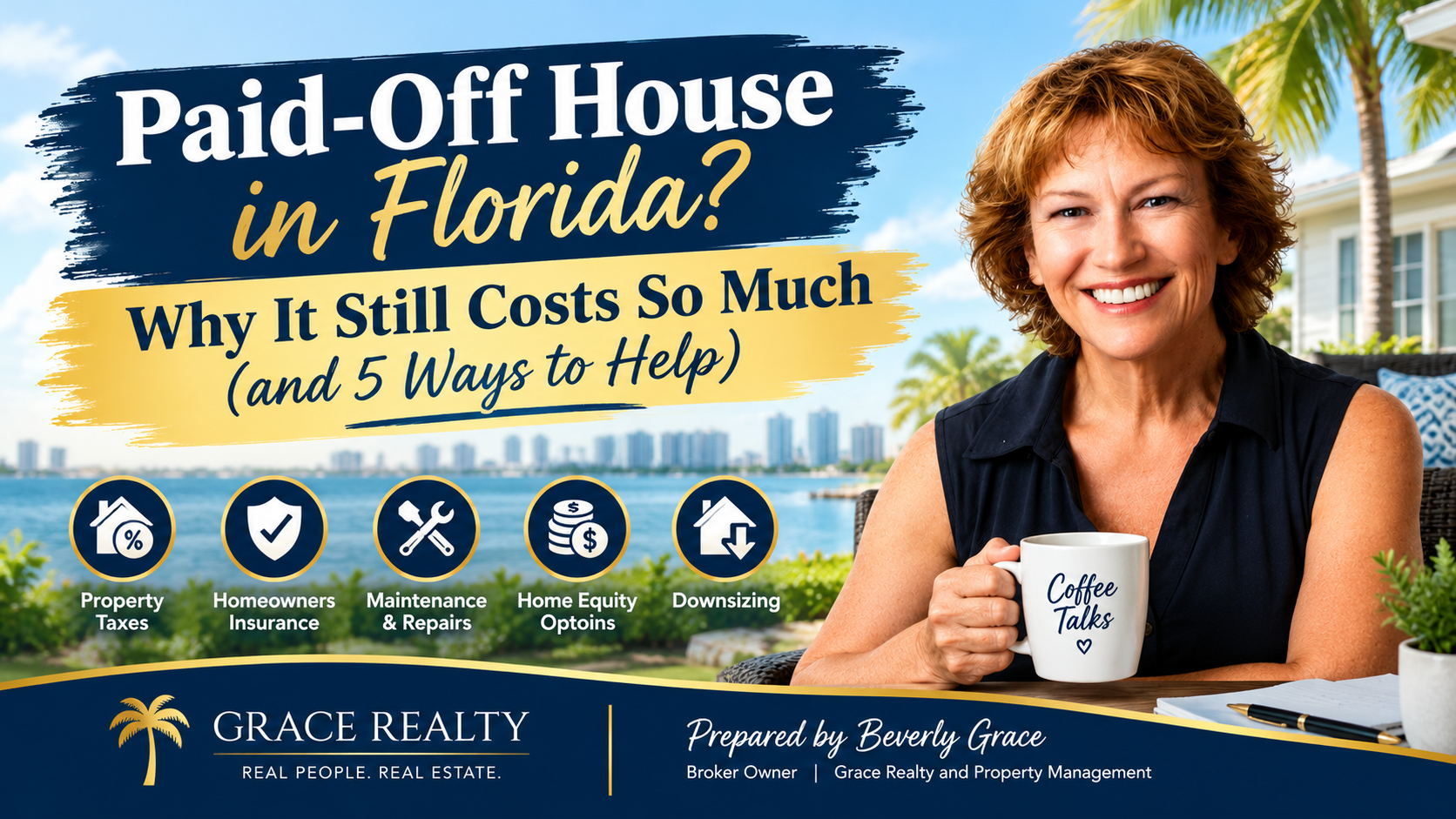
You are not alone. Many Tampa Bay homeowners feel the same way. The good news is that you have options. Here are five things to consider that can make owning your home more affordable.
1. Check Whether You Are Paying Too Much in Property Taxes
Florida offers real benefits for homeowners. Start with these two.
- Homestead exemption: This applies if the home is your permanent residence.
- Save Our Homes limit: This generally caps yearly increases in the assessed value of homestead property.
There may be more savings available too. Some counties and cities offer extra exemptions for qualifying low-income seniors. Other exemptions may apply to certain veterans, surviving spouses, and homeowners with qualifying disabilities.
What to do: Call your county property appraiser’s office. Ask them to review the exemptions on your property. You may already get everything you deserve. It is still worth checking, especially if you have owned the home for many years.
One important note: Save Our Homes limits assessed value, not your whole tax bill. Rate changes and other charges can still raise what you pay.
2. Take a Closer Look at Your Homeowners Insurance
In Florida, insurance can be one of the biggest yearly expenses. Before you accept your next renewal, ask yourself:
- Have I had a wind mitigation inspection?
- Does my home have features that could earn a discount?
- Have I compared prices and coverage from more than one company?
- Have I reviewed my policy with an experienced insurance agent?
Upgrades like a new roof or wind-resistant features can help. Still, don’t spend thousands just to save a little. Run the numbers first.
Here is one more thing. Once your mortgage is gone, no lender requires certain coverage. That gives you more flexibility. But being able to reduce coverage doesn’t mean you should. If something happens, you don’t want to put your retirement savings at risk. Talk with a qualified insurance professional first.
3. Remember: The House Doesn’t Know the Mortgage Is Paid Off
Wouldn’t it be nice if everything in your home kept working forever after the last payment? Sadly, it doesn’t work that way.
The roof still ages. The AC still wears out. The water heater can still leak. And the older your home gets, the more you need to plan for repairs.
Two simple habits help:
- Set aside money every month. Even a small amount builds a repair reserve and softens surprise bills.
- Keep up with maintenance. Service your AC, clear your gutters, and watch for plumbing leaks. Fixing small problems early can save you a lot.
4. Ask Whether Your Home Equity Can Support Your Retirement
A paid-off home often holds a lot of equity. But equity doesn’t pay the electric bill. It is tied up in the house.
Depending on your situation, you might:
- Rent a spare room to bring in monthly income.
- Add an accessory dwelling unit (ADU), if local zoning and other rules allow it.
- Look into a reverse mortgage. This is not a casual choice. It has costs, requirements, and long-term effects. Borrowers must keep paying property taxes, insurance, and maintenance. Talk with a HUD-approved housing counselor and an independent financial professional first.
Renting part of your home also comes with duties. Check insurance, taxes, zoning, and community rules before you start.
And sometimes the best move is to do nothing. Not every homeowner needs to tap their equity.
5. Decide If Your Home Is Still Working for You
Maybe you bought your home 30 or 40 years ago. You needed four bedrooms and a big yard for the kids and the holiday crowds. Now you use two rooms in a house with eight, and you spend weekends caring for space you no longer need.
If you love it, wonderful. But if upkeep has become a financial or physical burden, you may want to explore downsizing. Options include:
- A smaller home
- A villa or condo
- A 55+ community
- Renting for more flexibility
Be careful here. Downsizing doesn’t always mean spending less. In Florida, condo fees, HOA costs, insurance, special assessments, and tax changes can add up fast. Always compare the total cost before you move.
What Would Beverly Do?
If you sat across her kitchen table and said, “My house is paid off, but I can barely afford to keep it,” Beverly would start with one question: what is costing you the most? Is it insurance, taxes, repairs, utilities, or simply a house that has become too much?
From there, you can look at options. You might trim expenses, update the property, or downsize. Or you might decide to stay put. That is perfectly fine. Nobody should sell a home they’ve loved for 30 years just because a few bills are frustrating. The goal is to solve the problem without creating a new one.
Final Thoughts
Paying off your mortgage is worth celebrating. But being mortgage-free doesn’t always mean being worry-free. The real goal is to own your home free and clear and afford to enjoy living in it.
Thinking about staying, making changes, or downsizing in Tampa Bay? The team at Grace Realty & Property Management is happy to talk it through. There is no pressure and no obligation. You can contact Beverly and the team here, or read more about buying and selling in Tampa Bay and our property management services. More tips are on the Grace Realty blog.
Frequently Asked Questions
Do I still pay property taxes after my Florida mortgage is paid off?
Yes. Property taxes continue as long as you own the home. Homestead exemption and other exemptions may lower what you owe.
Does Save Our Homes lower my entire tax bill?
No. It generally limits yearly increases in assessed value. Changes in tax rates and other charges can still affect your total bill.
Can I drop my homeowners insurance once the mortgage is gone?
You may have more flexibility because no lender requires coverage. But reducing coverage can be risky. Speak with a qualified insurance professional first.
Is a reverse mortgage a good idea for retirees?
It depends. Reverse mortgages have costs and long-term effects. Talk with a HUD-approved housing counselor and an independent financial professional before deciding.
Does downsizing always save money in Florida?
Not always. Condo fees, HOA costs, insurance, special assessments, and tax changes can make a smaller home surprisingly expensive.