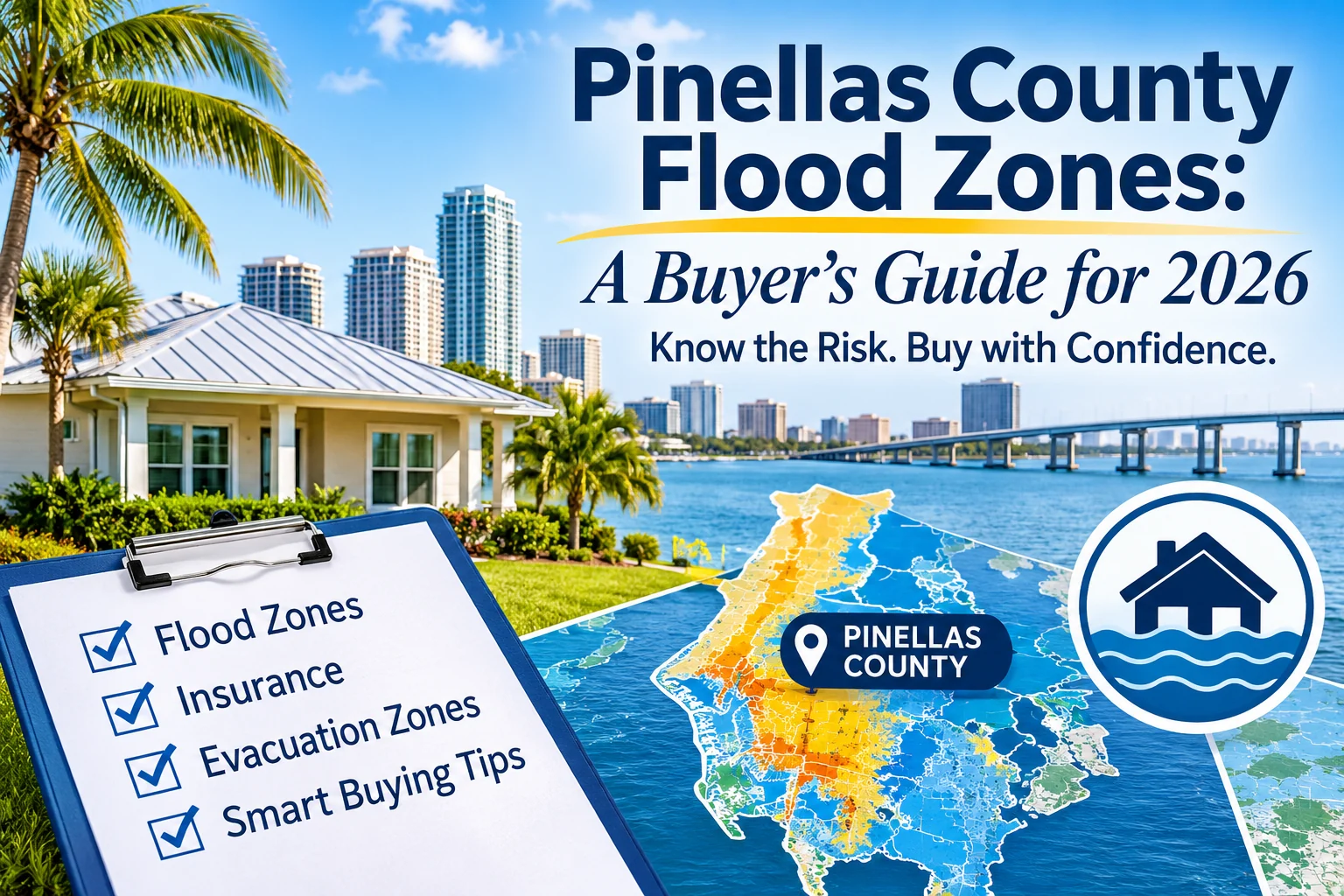

Two homes on the same street can have very different flood risks. Yet most buyers don’t find that out until after they fall in love with one of them.
If you’re shopping in Tampa Bay, Pinellas County flood zones belong on your checklist right next to price and location. They affect your insurance bill, your loan, and your peace of mind when storm season rolls around.
The good news is that flood zones are simple once someone explains them in plain English. This guide does exactly that. By the end, you’ll know how to check any address, what flood insurance really covers, and which questions to ask before you make an offer.
What Pinellas County Flood Zones Really Mean
Here’s a surprise. According to Pinellas County, everyone who lives here is in a flood zone. Pinellas is a peninsula, surrounded by water, so anywhere it rains, it can flood.
What changes is the level of risk. Flood zones are rated low, moderate, or high. FEMA shows them on Flood Insurance Rate Maps, often called FIRMs.
A high-risk zone has a 1% or greater chance of flooding in any given year. That sounds small. However, FEMA notes that over a 30-year mortgage, it adds up to roughly a 26% chance. That’s about one in four.
Flood Zone, Evacuation Zone, and Storm Surge: Know the Difference
Many newcomers mix these up. They are not the same thing.
- Flood zone: FEMA’s long-term flood risk rating for a property. Lenders and insurers use it.
- Evacuation zone: Tells you when to leave before a hurricane, based on storm surge.
- Storm surge: Ocean water pushed onto land by a storm.
A home can sit outside an evacuation zone and still be in a high-risk flood zone. A nearby creek or pond is enough. So, check all three before you buy.
FEMA Flood Zones at a Glance
You’ll see these letters on listings and insurance quotes:
- Zone A / AE: High risk. Most lenders require flood insurance on federally backed mortgages.
- Zone VE: High-risk coastal areas where waves add extra danger. Building rules are usually the strictest here.
- Zone X (shaded): Moderate risk.
- Zone X (unshaded): Lower risk. Insurance may be optional, but it’s still worth considering.
Keep in mind that lender rules vary. Always confirm with your lender and insurance agent.
How to Check Pinellas County Flood Zones in Five Minutes
You don’t need special training. Follow these steps for any home you’re considering:
- Search the address on the Pinellas County Flood Map Service.
- Cross-check it on FEMA’s Flood Map Service Center.
- Ask for the elevation certificate. It shows how high the home sits compared with expected flood levels.
- Read the seller’s flood disclosure (more on this below).
- Get an insurance quote before you make an offer, not after.
Step five matters most. A quote turns a vague worry into a real monthly number.
Ready to start looking? Use our Tampa Bay property search to find homes, then run each address through these steps.
Flood Insurance: What Buyers Should Know
First, a standard homeowners policy does not cover flood damage. You need a separate flood policy, either through the National Flood Insurance Program (NFIP) or a private insurer.
Second, if your home is in a high-risk zone and you have a federally backed mortgage, your lender will require it.
Third, plan ahead. NFIP policies usually have a waiting period of about 30 days, with some exceptions tied to closing on a loan. Ask your agent about timing early.
Also, pricing has changed. Since 2021, FEMA’s Risk Rating 2.0 prices policies using each home’s own features, such as elevation, distance to water, and rebuilding cost. As a result, two neighbors can pay very different premiums.
Finally, consider coverage even in a lower-risk zone. Hurricanes Helene and Milton in 2024 reminded many Tampa Bay homeowners that water doesn’t always follow the map. Get quotes from more than one source.
If you’re open to newer homes, our new construction page is a good place to start. Newer builds often follow more current building standards, which can influence both safety and insurance.
Florida’s Flood Disclosure Law: What Sellers Must Tell You
Florida law requires sellers of residential property to give buyers a flood disclosure at or before the contract is signed. It’s found in Florida Statute 689.302.
Since October 1, 2025, the form asks for more. Sellers must say whether they know of flooding that damaged the property during their ownership. They must also report flood-related insurance claims and any assistance received for flood damage, from any source.
As a buyer, read this form closely. If something looks unclear, ask your agent to follow up.
Flood Zone Tips for Every Type of Buyer
First-Time Home Buyers
Add flood insurance to your monthly budget before you start touring homes. A house that fits your payment on paper may not fit once insurance is included. Our blog has more beginner-friendly guides to help you plan.
Families Relocating to Florida
Don’t assume your last state’s rules apply here. Ask about elevation, past flooding, and the evacuation zone. Then compare a few neighborhoods side by side. Our local agents can walk you through each area, so meet the Grace Realty team before you plan your move.
Investors
Insurance costs affect your cash flow, so run the numbers early. Also remember the 50% rule. If repair or renovation costs reach 50% of a building’s value, the home generally must meet current floodplain standards. Confirm details with the local building department. Our featured listings include several investment-friendly homes in Clearwater and Largo.
Home Sellers
Gather your elevation certificate, repair records, and any insurance claim history before you list. Honest, organized paperwork builds trust. As a result, negotiations tend to go smoother. When you’re ready, contact Grace Realty for a pricing and listing plan.
Questions to Ask Before You Make an Offer
- What is the home’s current FEMA flood zone?
- Is there an elevation certificate?
- Has the property ever flooded or had a flood claim?
- What do flood insurance quotes look like for this exact address?
- Is the home in an evacuation zone?
- Were any repairs made after a storm, and were permits pulled?
Find Your Tampa Bay Home with Confidence
Flood zones shouldn’t scare you away from Florida’s Gulf Coast. They should simply make you a smarter buyer.
At Grace Realty, we help buyers, sellers, and investors across Tampa Bay understand the full picture before they commit. Don’t just take our word for it. Read what our clients say, then call us at 800-497-4072 or send us a message. We’ll help you look up any address and walk through your options.