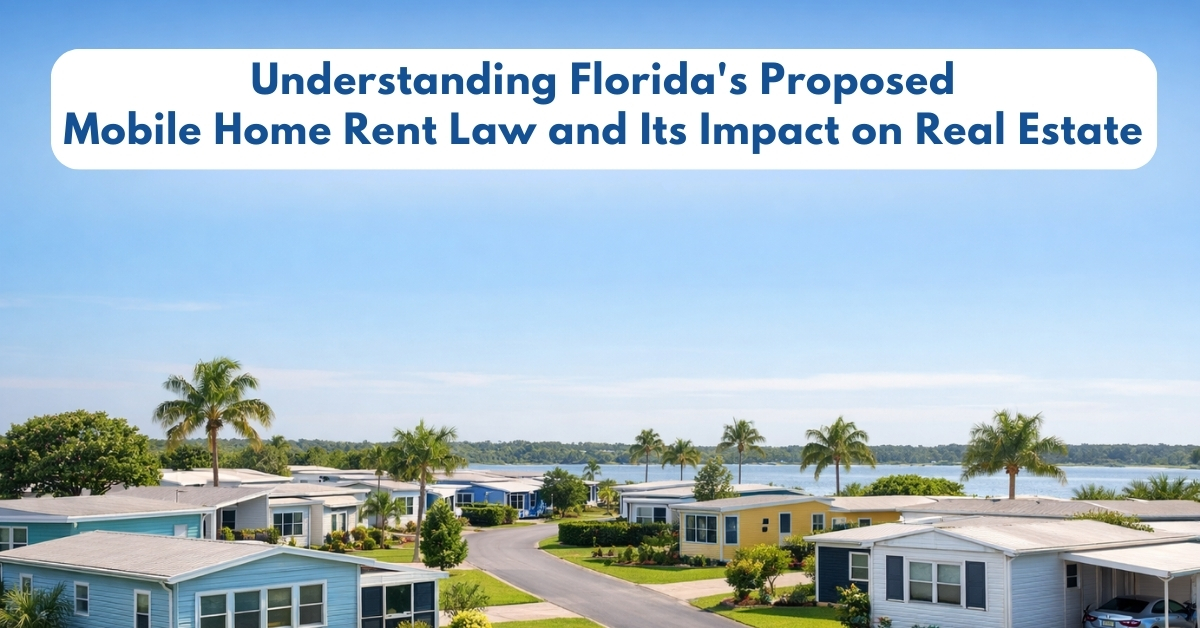

Florida is once again in the legislative spotlight as a newly filed bill — Senate Bill 1550 (SB 1550) — proposes significant changes to how mobile home parks are regulated across the state. Introduced by State Senator Lavon Bracy Davis (D-Ocoee), the bill focuses on rent increases, homeowner protections, and new compliance requirements for park owners.
For real estate professionals, investors, property managers, and mobile home owners, understanding this legislation is critical. Mobile home parks play a key role in Florida’s affordable housing ecosystem, and any regulatory shift can directly affect investment strategy, rental income, and long-term property value.
This blog breaks down what SB 1550 proposes, why it matters, and how it could impact Florida’s real estate market if passed into law.
What Is Florida Senate Bill 1550?
SB 1550 is a proposed update to Florida statutes governing mobile home parks. Its primary purpose is to expand how courts determine whether a lot-rent increase is “unreasonable,” while also introducing new rules related to rent payments, transparency, tenant protections, and compensation for displaced homeowners.
The bill reflects growing concerns among lawmakers and residents over rising lot rents, limited tenant bargaining power, and the increasing consolidation of mobile home parks by large investment groups.
As of now, SB 1550 is a proposed bill — not law — but it has already generated attention among real estate professionals due to the breadth of its potential impact.
Why This Bill Matters to the Real Estate Industry
Mobile home parks are often viewed as stable, income-producing assets with lower turnover compared to traditional rentals. At the same time, they serve as long-term housing for many Florida residents who own their homes but rent the land beneath them.
Recent years have seen increased scrutiny of mobile home park operations, especially regarding rent increases that residents argue are sudden or excessive. SB 1550 is part of a broader trend toward stronger tenant protections in affordable housing sectors.
For investors and property owners, the bill represents a shift toward increased oversight and accountability — something that could affect revenue planning, asset valuation, and operational strategy.
Key Changes Proposed Under SB 1550
1. Expanded Criteria for Rent Increase Reviews
Currently, courts may consider factors such as inflation, operating expenses, taxes, and prior disclosures when evaluating whether a rent increase is unreasonable.
SB 1550 expands this list to include additional indicators of financial pressure within a mobile home park, such as:
- The number of homes actively for sale at the time a rent increase is announced
- Discounts or incentives offered to new residents
- The number of homes abandoned by owners within the previous year
These added considerations aim to provide courts with a fuller picture of whether rent hikes are contributing to financial instability or resident displacement.
2. Extended Grace Period for Rent Payments
Under the proposed bill, mobile home owners would receive a 10-day grace period after receiving notice of late payment — doubling the current allowance.
Supporters argue this gives residents extra time to manage short-term financial difficulties and reduces unnecessary evictions. For property owners, this change may slightly delay rent collection but could also reduce legal disputes and turnover.
3. Limits on Mandatory Electronic Payments
SB 1550 would prohibit mobile home park owners from requiring electronic-only rent payments. Park owners would still be allowed to accept digital payments, but they must also accept checks.
Additionally, rent would be considered paid once the check is delivered, not when it is processed. This provision is particularly relevant for older residents or those without access to online banking.
4. Increased Transparency for Rent Increases
One of the most notable provisions of SB 1550 requires park owners to provide documentation supporting any proposed rent increase.
This includes invoices, cost breakdowns, or other evidence explaining why the increase is necessary. The goal is to reduce opaque pricing practices and allow homeowners to better understand and, if needed, challenge rent hikes.
5. Mandatory Rent Reductions When Services Are Removed
If a mobile home park removes amenities, utilities, or services that were previously included in the lot rent, SB 1550 would require a corresponding rent reduction.
For example, if a park eliminates a pool, clubhouse access, or shared utility service, the monthly rent must reflect the reduced level of service. This ensures homeowners are not paying full rent for diminished benefits.
6. Increased Compensation for Forced Relocation
The bill also proposes higher compensation for homeowners who are forced to relocate due to a change in land use, such as redevelopment or park closure.
Proposed compensation amounts include:
- $6,500 for a single-section home and $11,500 for a multi-section home if relocated
- $5,000 (single-section) or $7,000 (multi-section) if the homeowner abandons the home
- In abandonment cases, park owners would be required to reimburse the state for part of the compensation cost
These figures represent a significant increase over existing law and aim to reduce the financial hardship associated with forced displacement.
Potential Impact on Florida’s Real Estate Market
If SB 1550 becomes law, it could influence the mobile home sector in several ways:
Greater Regulatory Oversight
Investors may face more scrutiny when adjusting rents, requiring careful documentation and legal compliance.
Operational Adjustments
Extended grace periods and payment flexibility may require updates to rent collection policies and cash-flow planning.
Stabilized Communities
Stronger tenant protections could lead to lower turnover and more stable long-term occupancy, which may benefit responsible operators.
Shift in Investment Strategy
Some investors may become more selective, focusing on well-maintained parks with sustainable pricing rather than aggressive rent growth models.
Frequently Asked Questions (FAQ)
Is SB 1550 currently law?
No. SB 1550 is a proposed bill and is still under consideration by the Florida Legislature.
When would the changes take effect if passed?
Most provisions would likely take effect on July 1 of the year the bill is enacted, following Florida’s standard legislative timeline.
Does this bill apply statewide?
Yes. The bill applies to mobile home parks regulated under Florida statutes, typically parks with five or more rented lots.
How does this affect mobile home park investors?
Investors may need to adapt to increased transparency requirements, extended payment timelines, and stricter oversight of rent increases.
Is this bill good for homeowners?
Supporters argue it provides stronger protections, clearer communication, and fairer rent practices. Critics worry it could discourage investment in park upgrades.
Conclusion
Florida Senate Bill 1550 represents a meaningful shift in how mobile home parks may be regulated in the future. By expanding rent review criteria, increasing transparency, and strengthening homeowner protections, the bill reflects growing legislative attention on affordable housing stability.
For real estate professionals and investors, staying informed about this proposal is essential. Whether the bill passes or not, it signals where housing policy in Florida may be headed — toward greater accountability, fairness, and long-term community sustainability.
References
News4JAX – “New Florida mobile home bill would make major changes to rent, rules”
https://www.news4jax.com/news/florida/2026/01/12/new-florida-mobile-home-bill-would-make-major-changes-to-rent-rules/
Florida Senate – Senate Bill 1550 (Filed Version)
https://www.flsenate.gov/Session/Bill/2026/1550