
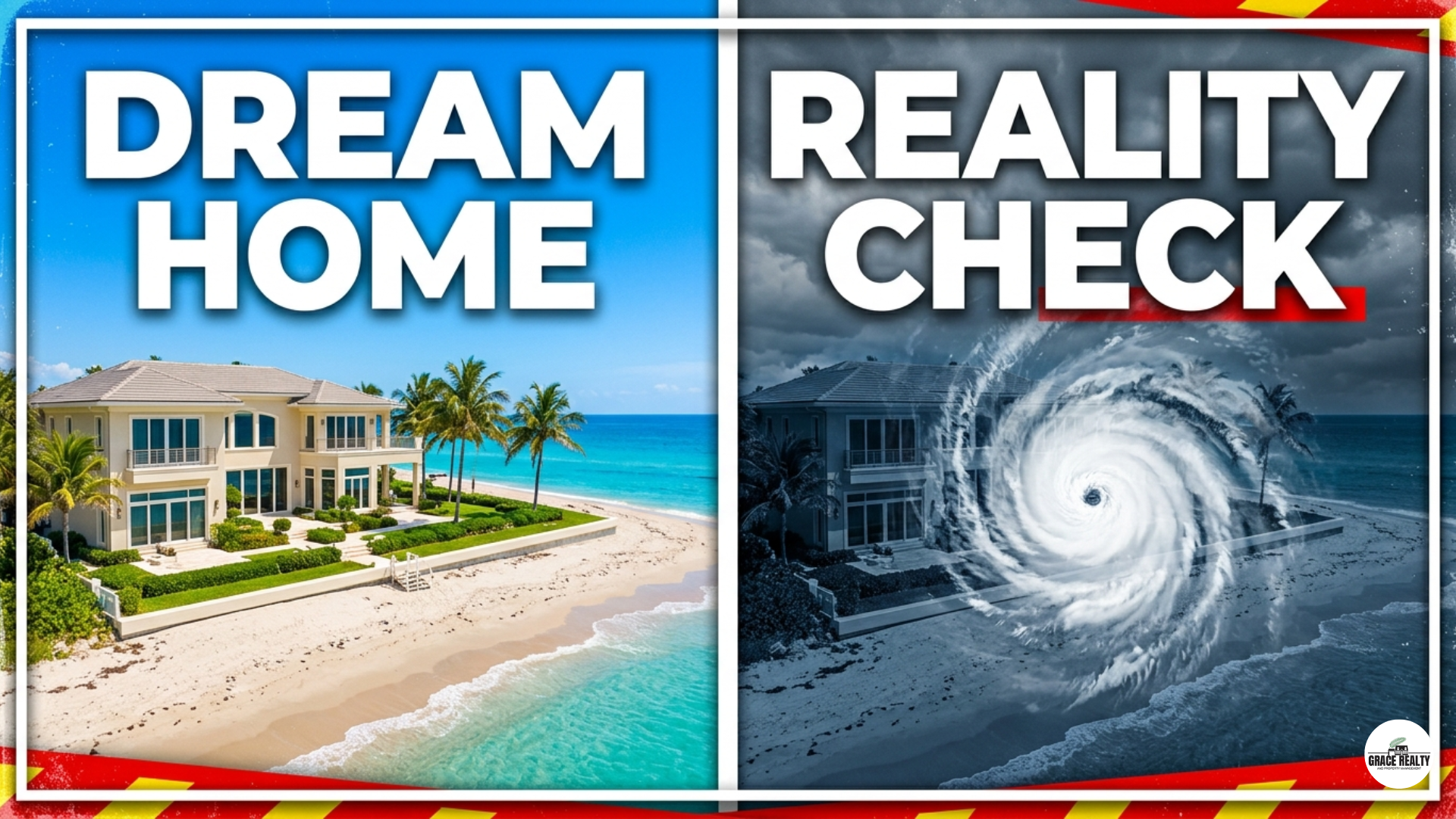

Let’s be honest — if you’re thinking about buying a home in Florida, the question of hurricanes is sitting in the back of your mind whether you’re ready to admit it or not. And you’re right to think about it. Hurricane season runs from June 1 through November 30 every single year, and in the Sunshine State, it’s not just a weather event. It’s a financial event. It shapes insurance premiums, property values, buyer decisions, and sometimes entire neighborhoods.
So before you fall in love with that waterfront listing or that gorgeous coastal condo in Naples, let’s talk about what 2026‘s hurricane season actually means for you as a buyer — and how to protect yourself.
What the 2026 Hurricane Season Forecast Actually Says
Let’s start with some good news. Colorado State University, which has been publishing seasonal hurricane forecasts since 1984 and is among the most closely watched in tropical meteorology, is calling for 13 named storms, 6 hurricanes, and just 2 major hurricanes of Category 3 strength or higher for the 2026 Atlantic hurricane season.
CSU put the probability of at least one major hurricane making landfall along the continental United States at 32%, compared to the long-term historical average of 43%. For the U.S. East Coast, including the Florida peninsula, the probability was placed at 15%, against a historical average of 21%. For the Gulf Coast from the Florida Panhandle westward to Texas, the probability was 20%, against a historical average of 27%.
That’s genuinely encouraging. But here’s the part that experienced Florida buyers already know: a “below-average season” doesn’t mean you’re off the hook. As the Insurance Information Institute’s CEO put it plainly — “all it takes is one storm to make it an active season for you and your family.”
Hurricane Ian in 2022 was one storm. It generated $54 billion in insured losses. One storm can rewrite an entire market.
Does Hurricane Season Affect Your Home Insurance Costs?
This is the question everyone asks, and the answer is more nuanced than you’d expect.
The first 2026 storm predictions call for a slightly below average storm season, but insurance experts in Florida say the storm forecast does not directly impact homeowners’ insurance premiums. Experts said rates have dropped anywhere from 10% to 40% in the last two years.
So why did rates drop? It’s not because of a quiet forecast. It’s because Florida’s legislature pushed through major insurance reforms — clamping down on what insurers called frivolous lawsuits and stabilizing the market. New insurance companies have entered the state. Citizens, Florida’s insurer of last resort, looked for a rate decrease of 2.6% at the end of 2025, after years of raising them, and ended 2025 with its lowest policy count ever at 385,000 policies as new carriers entered the market.
The reform is working. But it hasn’t solved everything.
Florida’s average homeowners insurance premium has risen to approximately $4,200 per year for a standard policy — more than double the national average of roughly $2,000. In coastal areas and older homes, premiums of $6,000 to $10,000 or more are not uncommon.
Here’s what that looks like by county:
- Palm Beach County: $5,000–$8,000/year, higher for coastal properties
- Duval County (Jacksonville): $3,800–$5,500/year
- St. Johns County: $3,500–$5,000/year
- Orange County (Orlando): $3,200–$4,500/year (lower hurricane risk than coastal counties)
If you’re budgeting for a Florida home purchase right now, insurance is not a line item you can estimate loosely. It needs to be calculated specifically for the home, the location, the roof age, and the flood zone — before you make an offer.
The Dirty Secret: Insurance Premiums Don’t Just Follow Storm Seasons
Here’s something a lot of buyers don’t realize. Insurance pricing is built on multi-year risk models, not individual season predictions. Even with projected activity below historical averages, the 2026 outlook leaves underlying exposure largely unchanged for insurers operating in hurricane-prone regions.
And there’s another hidden driver that even a quiet season can’t fix: rebuilding costs — driven by rising prices for lumber, roofing materials, labor, and imported construction goods — have continued to rise regardless of storm activity.
Throw in the uncertainty around tariffs on imported construction materials and you’ve got a situation where even in a quiet storm year, your insurance renewal could still go up slightly. The national average homeowners insurance premium is still projected to rise 4% in 2026, according to Insurify’s analysis.
This isn’t meant to scare you. It’s meant to help you plan. A knowledgeable buyer is a protected buyer.
How Hurricane Risk Should Shape Where You Buy in Florida
Not all of Florida carries the same hurricane risk, and understanding this can genuinely change which home — and which area — is right for you.
Coastal vs. Inland: Waterfront and barrier island properties carry the highest wind and flood exposure. Places like Sanibel, Captiva, and properties right on the Gulf of Mexico are stunning, but they’re priced with risk baked in — not just in purchase price but in ongoing insurance costs. Sanibel homeowners, for example, were already paying around $6,000/year in premiums before Hurricane Ian, and post-Ian costs for exposed risks have climbed significantly higher.
East Coast vs. Gulf Coast: The Gulf Coast historically sees more direct hurricane landfalls. The East Coast, including the Miami-Fort Lauderdale corridor, has a lower historical probability of major hurricane strikes, though it’s far from immune.
Central Florida: Markets like Orlando carry meaningfully lower hurricane risk than coastal areas, which is part of why insurance premiums there trend lower. If you want Florida lifestyle without the full coastal exposure, this region deserves a serious look.
Flood Zones: This is critical and often overlooked. A home doesn’t need to be on the water to sit in a FEMA-designated Special Flood Hazard Area. Always check the flood zone designation of any property you’re considering. If it requires flood insurance on top of your standard homeowners policy, that’s an additional cost that needs to be factored into your monthly payment calculation.
What Buyers Should Look for in a Hurricane-Resistant Home
Good news: Florida’s building codes are among the strongest in the country. After Hurricane Andrew in 1992 exposed catastrophic weaknesses, the state overhauled construction standards dramatically. Carriers are now saying roofs can be 20 to 25 years old on shingles — just a couple years ago, a 12-year-old shingle roof meant you were struggling to find homeowners insurance at all.
When evaluating a home, here’s what actually matters for both safety and insurance costs:
Roof age and type: Homes with newer roofs (under 10 years) qualify for significantly lower premiums. A metal roof is the gold standard for hurricane resistance and insurance pricing.
Wind mitigation features: A wind mitigation inspection (typically $75 to $150) documents your home’s hurricane-resistant features — roof shape, shutter type, roof-to-wall connections, and secondary water resistance. Homes that score well can see discounts of 20 to 40% or more.
Impact windows and storm shutters: These aren’t just safety features. They directly reduce your insurance premium.
Build year: Homes built after 2002, when Florida’s stricter building code took effect, qualify for significantly lower premiums. If you’re looking at an older home, it’s worth asking whether hurricane-resistant upgrades have been made.
Elevation: In flood-prone areas, the home’s base flood elevation relative to the FEMA-determined flood level can dramatically affect flood insurance costs.
How to Protect Your Investment as a Buyer
Whether you’re a first-time buyer or you’re relocating from out of state, there are concrete steps you can take right now to make a smarter purchase in the context of hurricane season.
Get an insurance quote before you close. This sounds obvious, but many buyers don’t get a real insurance quote until they’re under contract and almost at closing. By then, the sticker shock of a $9,000/year premium can blow up your budget. Request quotes early — before you make an offer on a coastal property.
Understand your hurricane deductible. Florida homeowners policies have separate hurricane deductibles, typically 2% to 5% of your dwelling coverage value. On a $500,000 home, that’s a $10,000–$25,000 out-of-pocket cost before insurance kicks in after a named storm. Increasing your hurricane deductible from 2% to 5% can lower your annual premium by 10 to 20% — but only do it if you have that deductible amount accessible in savings.
Don’t skip flood insurance. Standard homeowners policies do not cover flooding. The Insurance Information Institute recommends homeowners review their policies to confirm coverage for wind and water damage and assess the need for flood insurance separately. Many buyers in non-flood-zone areas skip this and regret it after a storm surge event.
Ask about My Safe Florida Home grants. Florida renewed the My Safe Florida Home program with $280 million in the 2025–26 budget, which keeps downward pressure on insurance for well-mitigated homes, especially those with upgraded roofs and windows. If you’re buying a home that needs mitigation upgrades, you may qualify for grants to help cover the cost.
Shop insurance every year. If you’re a customer and haven’t seen your rate drop in the past 24 months, insurance experts say it’s absolutely time to call your agent and ask if they’ve shopped the market.
Should Hurricane Season Actually Stop You From Buying in Florida?
Short answer: no. But it should absolutely shape how you buy.
Millions of people live in Florida and never experience significant hurricane damage. The key is going in with your eyes open — knowing exactly what your insurance covers, understanding the risk profile of the specific neighborhood and home you’re buying, and building that cost into your budget from day one.
The buyers who struggle in Florida are usually the ones who got a low insurance quote on a property with a brand-new roof, moved in, and then had no plan for what happens when that roof ages or when they’re offered renewal at double the price. The buyers who thrive are the ones who asked the right questions before they signed.
Florida is still one of the most desirable real estate markets in the country. The weather, the lifestyle, the tax advantages — they’re real. But so is hurricane season. Know the risk, plan for the cost, and buy smart.
Quick Checklist Before Buying a Home in Florida This Hurricane Season
- Check the FEMA flood zone designation of the property
- Get a homeowners insurance quote before making an offer
- Ask for the last wind mitigation inspection report
- Confirm the roof age and type
- Check if the home was built after 2002
- Ask about impact windows, storm shutters, and garage door ratings
- Budget separately for flood insurance
- Understand your hurricane deductible amount
- Look into My Safe Florida Home grants if you’re planning upgrades
- Confirm what’s in your HOA’s insurance policy if buying a condo
Buying a home in Florida is one of the best decisions you can make — as long as you make it with the full picture in front of you. Have questions about a specific neighborhood or property? Drop them in the comments below.