
You’ve found the house. The offer’s accepted. Now comes the step that decides whether this home is actually the right move: the inspection.
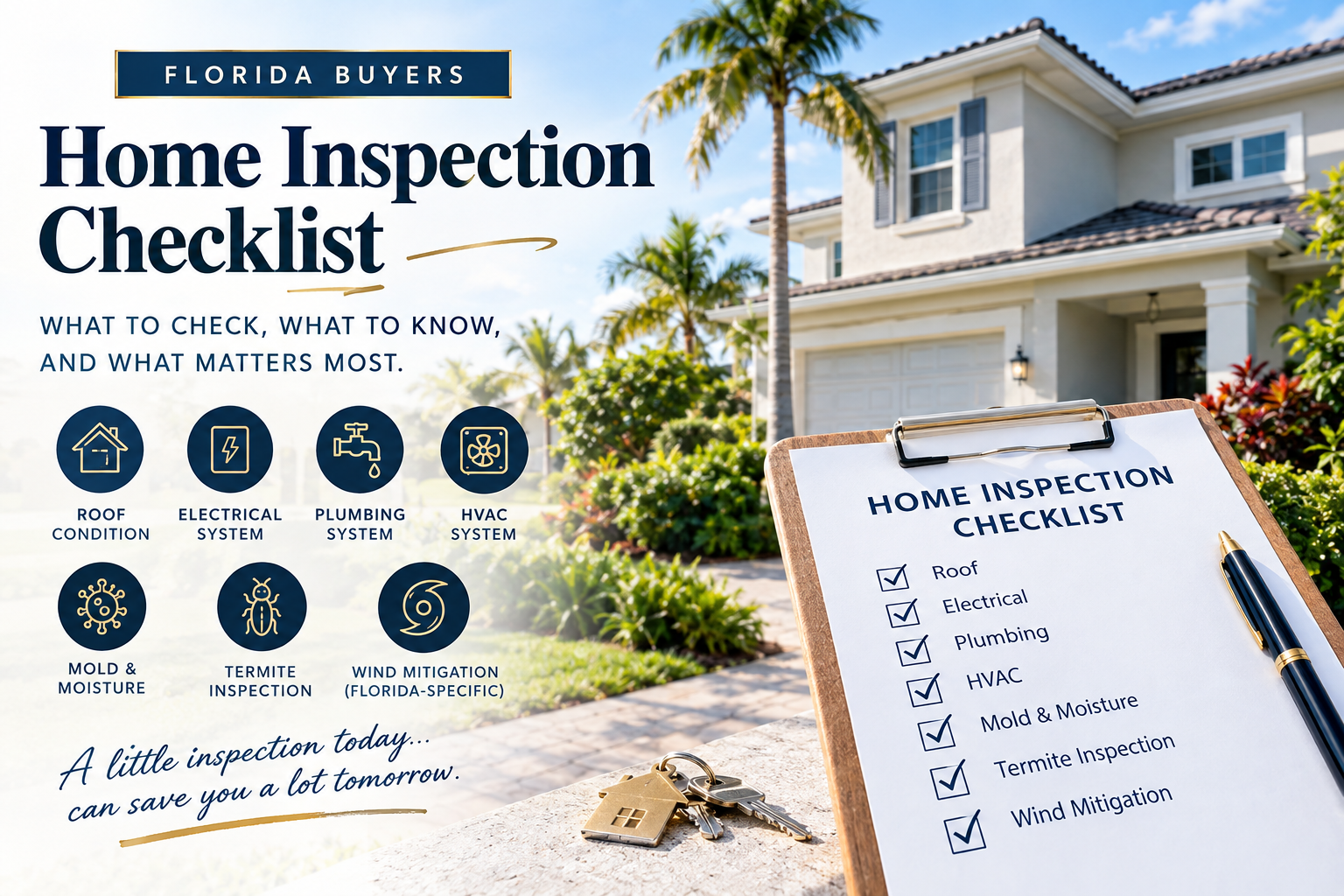
A thorough home inspection checklist in Florida looks a little different than it does in other parts of the country. Between roof age, humidity, and storm risk, there are a few items that matter more here than almost anywhere else.
Here’s exactly what to expect, and what you should never let slide.
Why Florida Inspections Come With Their Own Priorities
Florida’s climate puts real stress on homes that buyers in cooler, drier states rarely think about. Humidity accelerates mold growth. Intense sun ages roofing faster. And hurricane risk means storm-related wear shows up in ways a standard inspection checklist might miss if the inspector isn’t familiar with local conditions.
That’s why working with an inspector who specifically knows Florida homes matters more than picking whoever has the lowest price. You can ask an agent for a trusted local inspector who regularly works in the Tampa Bay area rather than searching blind.
Roof Condition: The Item That Affects Everything Else
The roof deserves more attention than almost any other item on the checklist, and not just for safety reasons.
Roof age and condition directly affect your insurance quote, sometimes dramatically. An inspector should check for missing or damaged shingles, signs of prior leaks, and overall wear relative to the roof’s expected lifespan. If the roof is nearing the end of its life, factor a replacement cost into your negotiation, not just your future to-do list.
The Four-Point Inspection
Many Florida insurers require a four-point inspection for older homes before issuing a policy. This focused inspection covers four specific systems:
- Roof. Age, material, and current condition.
- Electrical. Panel type, wiring age, and any outdated or hazardous components.
- Plumbing. Pipe material and condition, checking for outdated or problematic types.
- HVAC. Age and functioning condition of the heating and cooling system.
If your lender or insurer requires this inspection, it’s often separate from your general home inspection, so confirm with your agent whether you need to schedule both.
Wind Mitigation Inspection: Worth Requesting Even If Not Required
A wind mitigation inspection isn’t always mandatory, but it can lead to meaningful insurance savings by documenting storm-resistant features like roof shape, roof-to-wall connections, and window protection.
If the seller already has a recent report, request a copy. If not, it’s often worth ordering one yourself before finalizing your insurance quote, since the potential discount can outweigh the inspection cost many times over.
Mold and Moisture: A Florida-Specific Priority
Florida’s humidity makes moisture intrusion a bigger concern here than in drier climates. A thorough inspector will check for signs of past water damage, condensation issues around AC systems, and any musty odors that could point to hidden mold.
This is one area where it’s worth asking direct questions rather than assuming a general inspection covers it thoroughly. If there’s any visible staining, warped flooring, or unusual smell, ask specifically whether further mold testing makes sense before moving forward.
Termite Inspection: Often Required, Always Worth It
Florida is termite country, and many lenders require a termite inspection as part of the closing process, especially for conventional and FHA loans.
Even when not required, it’s worth getting one done regardless. Termite damage can be extensive and expensive to repair, and it’s not always visible during a standard walkthrough.
What to Do If the Inspection Reveals Problems
Finding issues during inspection isn’t automatically a dealbreaker. It’s information you can use.
Depending on what’s found, you generally have a few options: ask the seller to make repairs before closing, negotiate a credit toward the cost of fixing it yourself, or in more serious cases, walk away if the issues are significant enough. A good agent can help you figure out which option makes sense based on what the inspection actually found.
Red Flags Worth Taking Seriously
A few findings deserve extra attention rather than being brushed aside:
- Active roof leaks or significant water staining
- Outdated or hazardous electrical panels, like certain older panel brands with known safety issues
- Foundation cracks or signs of settling
- Evidence of prior flood damage not disclosed by the seller
- Active termite damage or infestation
None of these automatically mean you should walk away, but they all deserve a clear conversation with your inspector and agent before moving forward.
Frequently Asked Questions
How much does a home inspection cost in Florida? Costs vary based on home size and location, but a general home inspection typically runs a few hundred dollars, with additional costs for specialized inspections like wind mitigation or termite reports. Getting a few quotes from licensed Florida inspectors is a reasonable way to compare pricing.
What is a four-point inspection, and do I need one? A four-point inspection covers the roof, electrical, plumbing, and HVAC systems. Many insurers require it for older homes before issuing a policy, so it’s worth confirming with your lender or insurance agent early in the process.
Can I negotiate repairs after a home inspection in Florida? Yes. Depending on what the inspection finds, buyers can often request repairs, negotiate a credit toward closing costs, or in some cases renegotiate the purchase price based on the findings.
Is a wind mitigation inspection required to buy a home in Florida? It’s not always required, but it can lead to meaningful insurance discounts by documenting a home’s storm-resistant features. Many buyers choose to get one even when it’s optional.
What happens if a home inspection reveals termite damage? Termite damage doesn’t automatically end a deal, but it usually needs to be addressed before closing, either through seller-funded repairs, a price adjustment, or further evaluation of the extent of the damage.
Ready to Schedule Your Inspection?
A thorough home inspection checklist protects you from expensive surprises and gives you real leverage at the negotiating table.
Browse current Tampa Bay listings, check out more homebuying guides on our blog, or ask an agent for a trusted local inspector today. The team at Grace Realty is here to help you move through this step with confidence, not confusion.