
A home can stay dry for 30 years and still flood in one night. That’s the reality of buying on Florida’s Gulf Coast. And it’s why Pinellas County flood zones should be on your checklist before you fall in love with a kitchen.
Pinellas sits on a narrow peninsula between Tampa Bay and the Gulf of Mexico. Water is close from almost every direction. That’s what makes the lifestyle so appealing. However, it also means your flood zone can change your monthly payment, your loan, and your resale value.
This guide explains the zones in plain English. You’ll also learn how to check any address and what to ask before you write an offer. If you’re already searching, you can browse homes on the Grace Realty property search while you read.
What Are Pinellas County Flood Zones?
A flood zone is an area on a FEMA flood map. Each zone shows how likely flooding is in that spot. FEMA uses these maps to set rules for lenders, builders, and insurance.
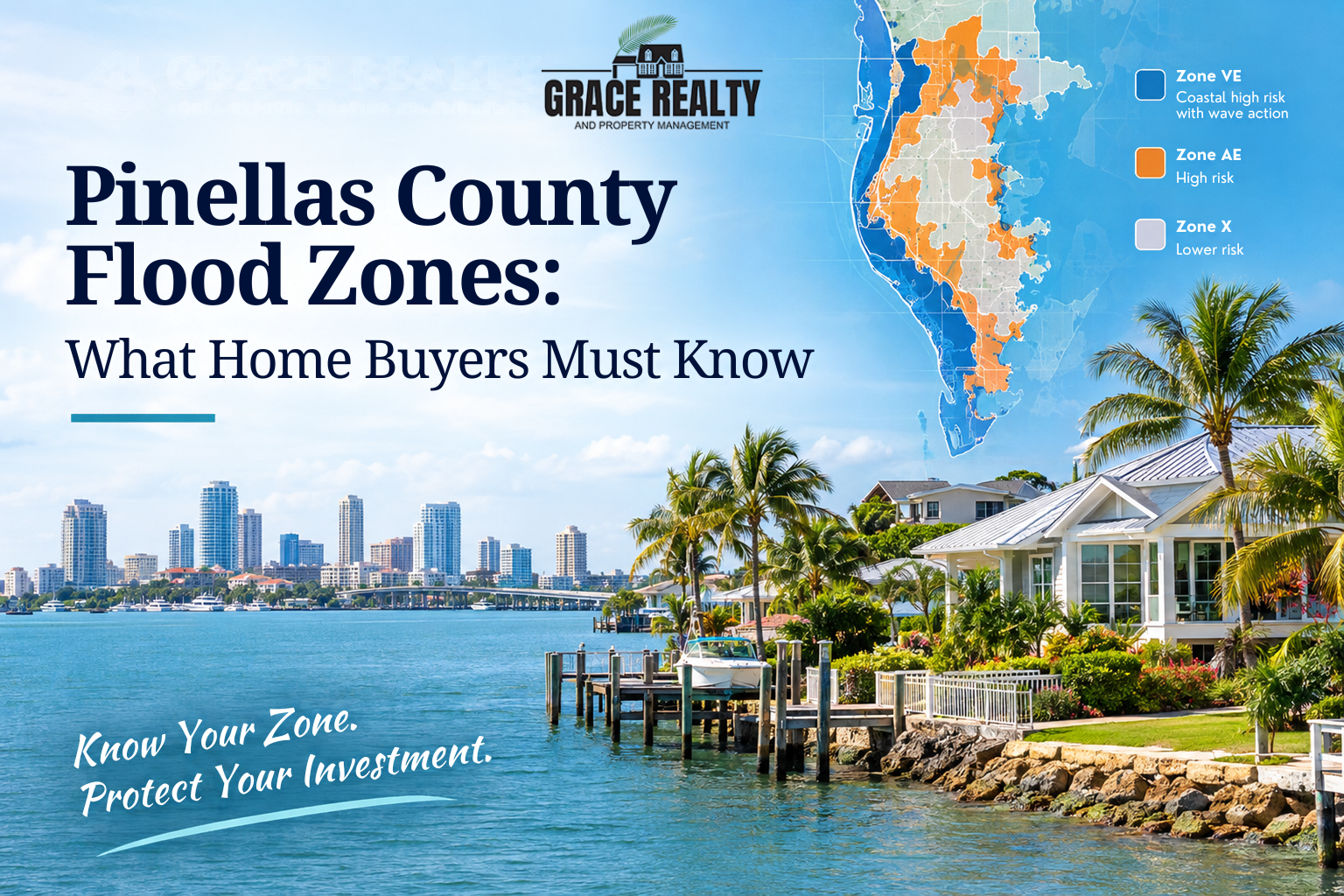
Here are the zones you’ll see most often in Pinellas County:
- Zone X: Lower risk. Flood insurance is usually not required. It’s still smart to have.
- Zone AE: High risk. Lenders require flood insurance on federally backed mortgages.
- Zone VE: Coastal high risk, with wave action. Common near beaches and open water. Expect stricter building rules and higher premiums.
A zone is only a starting point, though. Two homes on the same street can have different risk levels. Elevation, drainage, and distance from the water all matter.
Why Your Flood Zone Matters When Buying
Many buyers only look at price and location. Yet the flood zone quietly affects four big things.
1. Your mortgage. If a home sits in a high-risk zone and you have a federally backed loan, your lender will require flood insurance. You can’t skip it.
2. Your monthly cost. Premiums vary widely. They can run from a few hundred dollars a year to several thousand. Elevation, roof age, and flood history all play a part.
3. Your resale value. Future buyers will ask the same questions you’re asking now. A home with strong documents and reasonable insurance costs sells with less friction.
4. Your renovation plans. FEMA’s “50% rule” can matter here. If a repair or remodel costs more than half the building’s value, the home may need to meet current flood standards. That can turn a simple project into an expensive one.
Flood Zone vs. Evacuation Zone: Don’t Mix Them Up
Many newcomers assume these are the same thing. They’re not.
A flood zone is about insurance and building rules. An evacuation zone is about storm surge and when officials tell residents to leave. A home can be in a low-risk flood zone and still sit in an evacuation zone. As a result, you should check both. The Florida Division of Emergency Management has storm and evacuation resources.
If you’re relocating from another state, this step matters even more. Local knowledge is hard to build from far away. That’s why many out-of-state buyers lean on a local agent. You can read what past clients say on our testimonials page.
How to Check a Flood Zone by Address
You can do the first pass yourself in about ten minutes. Here’s how:
- Search the address on the FEMA Flood Map Service Center.
- Confirm it with the flood map tools on the Pinellas County website.
- Check the evacuation zone on the county’s storm information pages.
- Ask for an elevation certificate. A licensed surveyor prepares this document. It shows how high the home sits compared to the expected flood level.
- Get a real insurance quote before your inspection period ends.
Maps also change. FEMA has been updating flood maps in parts of Pinellas County, so an address that was low risk last year may be reviewed again. Ask your agent to confirm the current status, including any proposed changes.
Understanding Flood Insurance in Florida
Standard homeowners insurance does not cover flood damage. You need a separate policy. There are two main options:
- NFIP (National Flood Insurance Program): Backed by the federal government. Building coverage is capped at $250,000 for a single-family home. You can learn the basics at FloodSmart.gov.
- Private flood insurance: Often offers higher limits. This matters on waterfront homes worth much more than the cap.
Since 2021, FEMA’s Risk Rating 2.0 has priced policies by each property’s own risk. It no longer relies mostly on the zone letter. So the zone alone can’t tell you the premium. Only a quote can.
Keep one more rule in mind. Most flood policies have a waiting period of about 30 days before they start. Don’t wait until a storm is in the forecast.
Tips for Different Types of Buyers
First-time buyers. Ask for the insurance quote before you make an offer. It should be part of your budget, just like taxes.
Families relocating to Florida. Ask about flood history, past claims, and the roof’s age. Also, ask how the home did in recent hurricanes.
Investors. Insurance is a real operating cost. Build it into your numbers. Also, check the 50% rule before you plan a major rehab. Grace Realty also offers property management, so you can plan for ownership and upkeep in one place.
Sellers. Gather your elevation certificate, insurance records, and repair receipts early. Florida also has flood disclosure requirements for sellers, so confirm what applies to your sale. For current market and legal guidance, Florida Realtors is a reliable resource. Clear documents build trust and speed up negotiations.
Should You Avoid Flood Zones Altogether?
Not necessarily. Plenty of buyers choose waterfront or coastal homes with open eyes. The views, boating access, and lifestyle are worth it to them.
The goal is not to avoid risk completely. Instead, you want to know it, price it, and plan for it. A home in Zone AE with good elevation and a fair premium can be a smarter buy than a “low-risk” home with hidden problems.
Some buyers also prefer newer homes built to current standards. If that sounds like you, take a look at our new construction options.
Ready to Buy in Tampa Bay?
Every property has its own flood story. The right agent will help you read it before you commit.
At Grace Realty, we help buyers, sellers, and investors across Pinellas County make confident decisions. You can start by viewing our featured listings, meeting the team, or contacting us with questions about a specific address. For more local guides, visit the Grace Realty blog.
Frequently Asked Questions
What is the most common flood zone in Pinellas County?
Homes appear in several zones, including X, AE, and VE. Coastal and waterfront areas are more likely to be AE or VE. Many inland areas are Zone X.
Is flood insurance required in Pinellas County?
It’s required if the home is in a high-risk zone and you have a federally backed mortgage. It’s optional in other cases, but it’s strongly recommended.
How do I find out my flood zone?
Enter the address in the FEMA Flood Map Service Center. Then confirm the result with Pinellas County’s flood map tools or your agent.
What is an elevation certificate?
It’s a document from a licensed surveyor. It shows a building’s height compared to the expected flood level. It can help lower your insurance cost.
Does homeowners insurance cover flooding?
No. Flood damage needs a separate flood policy.
How long before flood insurance starts?
Most policies have a waiting period of about 30 days. There are limited exceptions, such as certain loan closings.