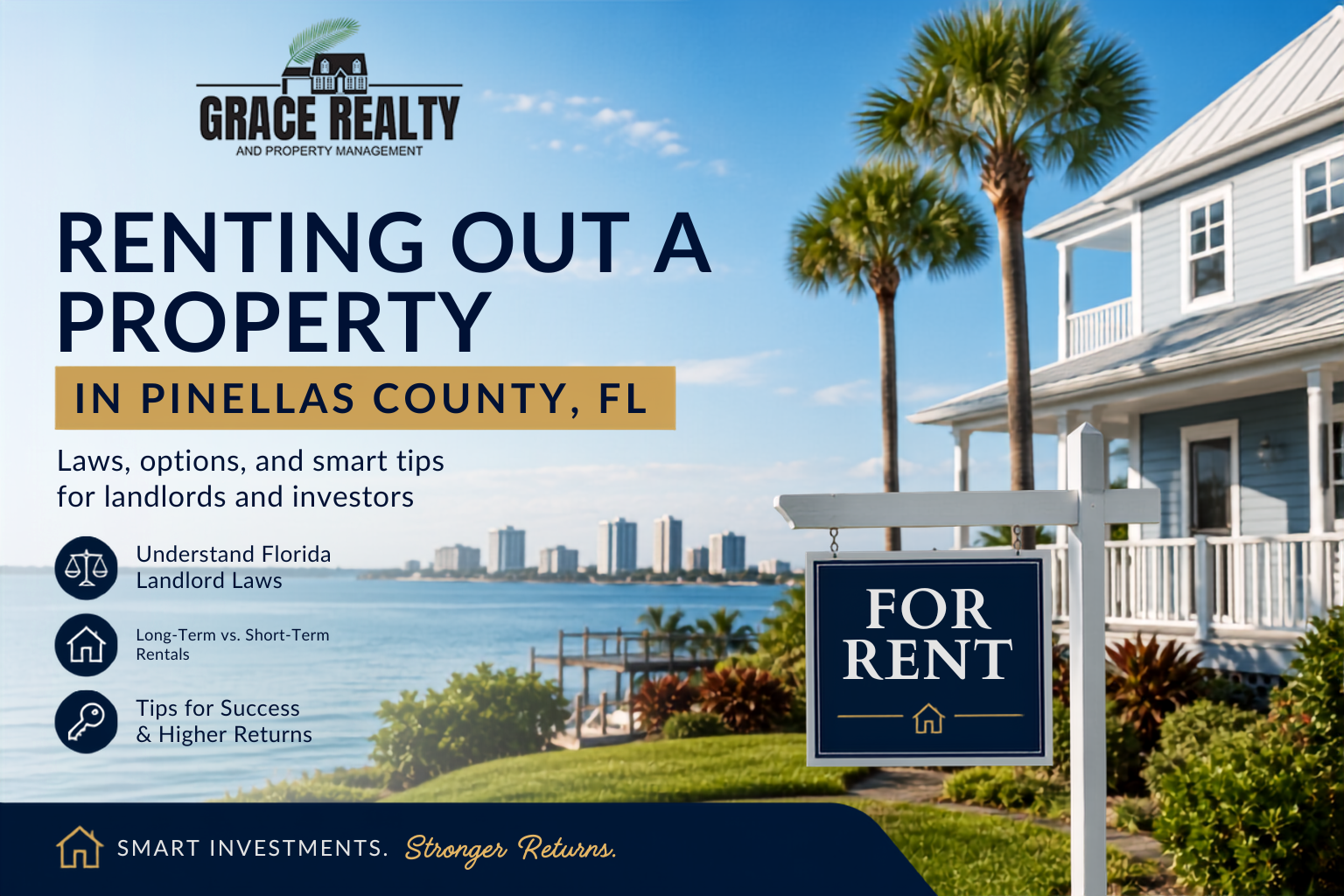

Thinking about turning a property into a rental? You’re in good company.
Pinellas County draws renters year-round, from young professionals working in Clearwater and St. Petersburg to seasonal visitors chasing the Gulf Coast winter. But before you list a property, it helps to know the rules of the road.
Florida gives landlords a lot of freedom compared to many other states. That freedom comes with responsibilities too. Here’s what to know before you rent out your first, or fiftieth, property in Pinellas County.
Long-Term Rentals: What Florida Law Allows
Florida doesn’t have rent control. State law actually blocks cities and counties from capping how much you can raise rent, so landlords have real flexibility when a lease renews.
That flexibility comes with rules around notice. If a tenant is on a month-to-month lease, Florida requires at least 15 days’ notice before you can raise the rent or begin the eviction process. Missing that notice window can delay a rent increase or complicate a move-out.
Security deposits, habitability standards, and the eviction process are all governed by Florida Statutes, Chapter 83. It’s worth a quick read, or a conversation with a property manager, before your first lease goes out, so there are no surprises if a tenant relationship goes sideways.
Short-Term Rentals: A More Complex Picture
If you’re picturing an Airbnb near the beach, the rules get more layered.
Pinellas County has its own short-term rental ordinance covering stays of less than 30 days. Owners generally need a Certificate of Use, and the county sets occupancy limits, typically two guests per bedroom plus two more in common areas, up to a maximum of 10.
Parking requirements apply too, along with quiet hours and safety notices. And county rules are only part of the picture. Individual cities within Pinellas County, along with any HOA or condo association, can layer on their own restrictions, some stricter than the county’s.
Before buying a property with short-term rental income in mind, verify what’s actually allowed at the property level. A listing that looks perfect for Airbnb can turn out to be restricted by an HOA that has nothing to do with county law. Our team can help you check this before you make an offer, reach out here or start browsing options through our property search tool.
Should You Go Long-Term or Short-Term?
There’s no universal right answer, it depends on your goals, your property, and how hands-on you want to be.
Long-term rentals tend to offer steadier, more predictable income with less turnover and lower management overhead. They’re a strong fit for investors who want a more passive experience.
Short-term rentals can generate higher income during peak season, especially near the beaches, but they come with more regulatory complexity, more turnover, and more hands-on management, cleaning, guest communication, and compliance all add up.
If managing either option yourself sounds like more than you want to take on, professional property management can handle everything from tenant screening to compliance, so the income stays passive on your end.
Don’t Overlook ADUs as a Rental Option
Accessory dwelling units, or ADUs, are worth a look if you already own property in unincorporated Pinellas County.
Recent updates made building an ADU more accessible, with development review fees waived and a clear size cap for what’s allowed. For homeowners with a parent or grandparent living with them, there’s also a property tax exemption tied to multigenerational housing.
Even if a family member isn’t the plan, an ADU can become a second rental income stream on a single lot, effectively doubling what one property can produce. It’s a bigger upfront project than simply renting out an existing home, but for the right lot, the long-term returns can be worth it.
Getting the Property Ready to Rent
Whatever route you choose, a few basics make a real difference in how fast, and how well, a property rents.
Fresh paint, functioning appliances, and clean flooring go a long way toward attracting reliable tenants. For coastal properties, wind mitigation features like impact windows or a newer roof aren’t just good for insurance costs, they’re also a selling point for tenants who care about storm safety.
Pricing matters too. A property priced slightly under market often rents faster and attracts a stronger pool of applicants, which can reduce vacancy time and turnover costs down the road.
See what well-prepared rental-ready homes look like on the market through our featured listings.
When to Bring in a Property Manager
Managing a rental yourself can work well for one property close to home. It gets harder fast with multiple units, out-of-state ownership, or a short-term rental that needs daily attention.
A good property manager handles tenant screening, rent collection, maintenance coordination, and compliance with local ordinances, pall the parts of landlording that eat up time without building equity. For investors focused on growing a portfolio, that time back is often worth far more than the management fee.
Curious whether self-managing or handing it off makes more sense for your situation? Meet our team and we’ll help you think it through.
Final Thoughts
Renting out a property in Pinellas County can be a genuinely strong investment, steady demand, a growing population, and a favorable landlord-tenant framework all work in your favor.
The key is doing your homework upfront: know the rules for your rental type, price the property right, and decide honestly how hands-on you want to be. Get those three things right, and the rest tends to fall into place.
Ready to find the right rental property, or talk through your options? Contact Grace Realty today.
10. FAQ Section (Schema-Ready)
Q: Is there a limit on how much I can raise rent in Florida? A: No. Florida has no rent control, and state law prevents cities and counties from capping rent increases. Landlords must still provide proper notice, typically at least 15 days for month-to-month leases.
Q: Do I need a permit to run a short-term rental in Pinellas County? A: Yes, in most cases. Pinellas County requires a Certificate of Use for stays under 30 days, along with compliance with occupancy limits, parking rules, and safety requirements.
Q: Can an HOA block me from renting out my property? A: Yes. Even where county or city law allows rentals, HOA and condo association rules can impose their own restrictions, so it’s important to review governing documents before buying with rental income in mind.
Q: What’s the difference between long-term and short-term rental income in Pinellas County? A: Long-term rentals typically offer steadier, lower-maintenance income, while short-term rentals can generate higher seasonal income but come with more regulation and hands-on management.
Q: Can I build an ADU to rent out on my property? A: In many parts of unincorporated Pinellas County, yes. Recent rule changes made ADUs more accessible, with waived review fees and a defined size cap, making them a potential second income stream on an existing lot.
Q: Is it worth hiring a property manager for one rental home? A: It depends on your time and location. Many owners self-manage a single nearby property, but a property manager becomes valuable once you own multiple units, live out of state, or run a short-term rental that needs daily attention.