

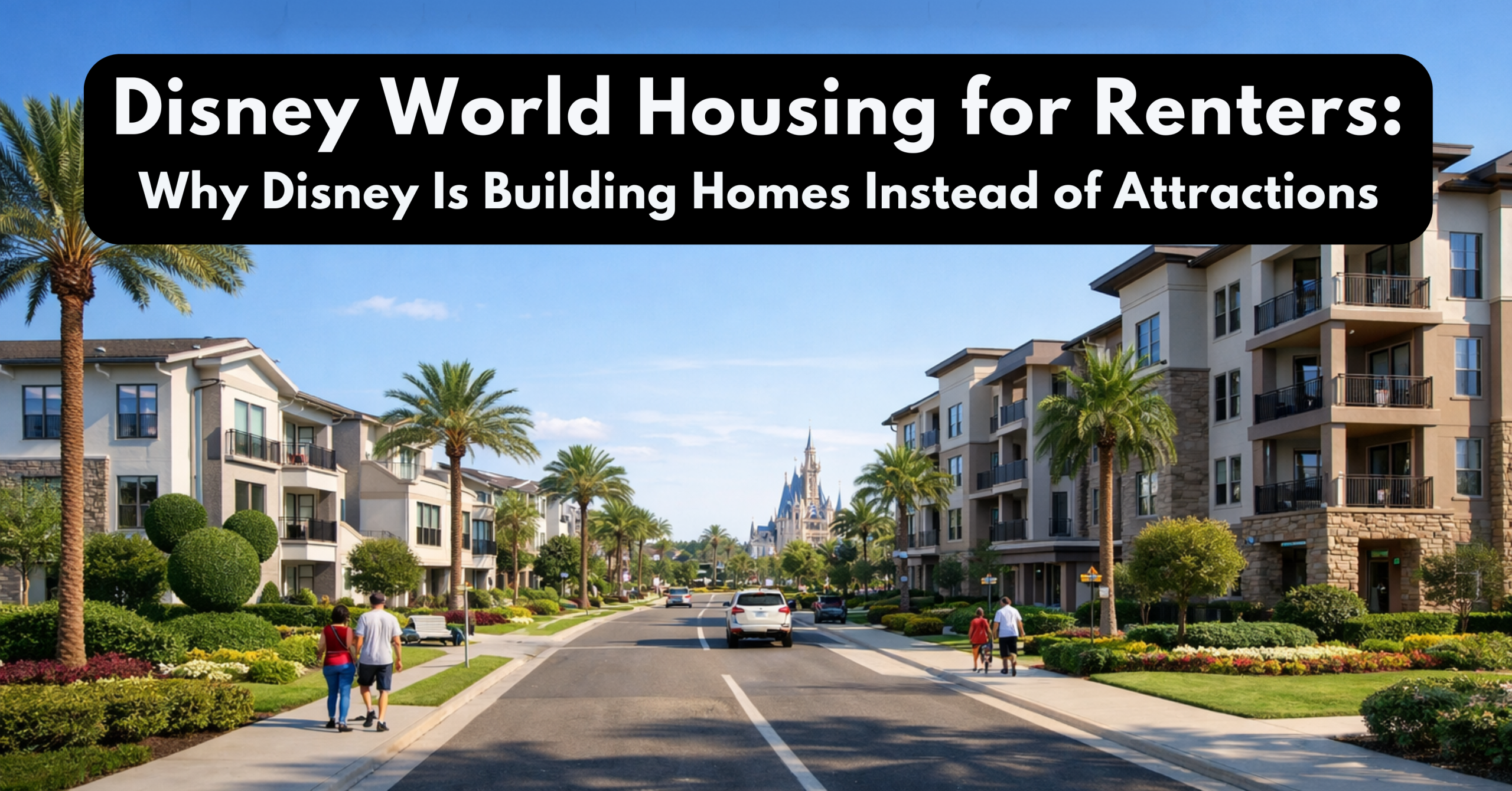

When people think of Disney World, they picture fireworks, roller coasters, and magical vacations. Housing is probably the last thing that comes to mind. But in a surprising move, Disney World is developing housing for renters in Florida, marking a major shift in how large corporations are responding to the state’s growing affordability crisis.
Instead of building another resort or theme park expansion, Disney has partnered with The Michaels Organization to create a large rental housing community on Disney-owned land near Orlando. The project includes more than 1,300 rental units and is designed specifically for Florida renters, not tourists.
So why is Disney doing this, how real is the project, and what does it mean for renters and the local real estate market? Let’s break it down.
What Is Disney World Housing for Renters?
Disney World housing for renters is a planned multifamily rental development located on land owned by Walt Disney World in southwest Orange County, near the Horizon West area of Orlando.
Rather than selling the land to a private developer, Disney chose to work with The Michaels Organization, one of the most experienced affordable and workforce housing developers in the United States. Michaels will build, own, and operate the community, while Disney provides the land and long-term support.
The project has been in development for more than three years and recently received key state approval, allowing it to move closer to construction.
Key highlights:
- Over 1,300 rental homes
- Focus on workforce and attainable housing
- Built on Disney-owned land
- Intended for local renters
- Managed by a national affordable housing expert
This isn’t a concept or idea — it’s an approved, real development moving forward.
Why Is Disney Building Housing?
The answer is simple: housing affordability in Florida is a serious problem.
Over the last decade, Central Florida has experienced:
- Rapid population growth
- Rising rent prices
- Limited new affordable housing supply
Many workers — including teachers, healthcare professionals, hospitality employees, and service workers — are being priced out of the areas where they work.
Disney is one of the largest employers in Central Florida. When workers can’t find affordable housing nearby, it leads to long commutes, higher turnover, and workforce instability. Disney has openly acknowledged that housing challenges affect the entire region, not just employees.
By supporting Disney World housing for renters, the company is helping address:
- Housing shortages
- Workforce retention
- Community sustainability
This move also reflects a broader trend of major corporations stepping in where housing supply hasn’t kept up with demand.
Who Is the Michaels Organization?
The Michaels Organization is not a random developer. It is the largest privately held owner of affordable housing in the United States, with decades of experience building and managing rental communities nationwide.
Their involvement is important because it ensures:
- Professional long-term management
- Experience with income-based housing models
- Stability beyond the initial construction phase
Disney selecting Michaels shows that this project is meant to be a serious, long-term housing solution — not a marketing stunt.
What Does “Workforce Housing” Mean?
You’ll often hear this project described as workforce or attainable housing rather than traditional low-income housing.
Workforce housing is designed for people who:
- Earn too much to qualify for government-subsidized housing
- Struggle to afford market-rate rents
In Central Florida, this includes a huge portion of renters. While exact rent prices have not yet been announced, the goal is to keep rents below market rates, making them more accessible to middle-income households.
Recent Approval: Why This News Matters Now
The reason Disney World housing for renters is making headlines now is because the project recently received state-level environmental and development approval.
This approval allows:
- Site preparation
- Infrastructure planning
- Next-stage development
In large real estate projects, approvals like this are major milestones. They confirm that the project is real and moving forward, not stuck in planning.
Construction timelines have not yet been finalized, but this step puts the development firmly on track.
How This Affects Orlando Renters
For renters in Central Florida, this project could make a meaningful difference.
Benefits include:
- More rental supply in a tight market
- Potentially lower rent pressure in surrounding areas
- Housing closer to major employment centers
Even renters who don’t live in the Disney development may benefit indirectly. When new housing is added, it helps stabilize the overall rental market.
Impact on the Local Real Estate Market
From a real estate perspective, Disney World housing for renters sends a strong message.
It shows that:
- Workforce housing is becoming a priority
- Large employers recognize housing as an economic issue
- Corporate-backed developments can reduce market risk
This project could encourage other large landowners and employers to explore similar housing initiatives, especially in high-growth markets like Orlando.
Frequently Asked Questions (FAQ)
Is Disney building housing only for its employees?
No. The housing is intended for Florida renters, not exclusively Disney employees.
Will Disney manage the housing?
No. The Michaels Organization will own and manage the property. Disney’s role is providing land and support.
How many rental units are planned?
The development will include more than 1,300 rental homes.
Where is the housing located?
On Disney-owned land in southwest Orange County near Horizon West, close to Orlando job centers.
Is construction underway?
Construction has not fully started yet, but the project has received key approvals to move forward.
Final Thoughts
Disney World housing for renters represents something bigger than just one development. It shows how housing affordability has become a central issue for Florida’s economy — and how private companies can play a role in solving it.
This project won’t fix the housing crisis overnight, but it’s a meaningful step in the right direction. For renters, it offers hope. For the real estate industry, it offers a model worth watching.