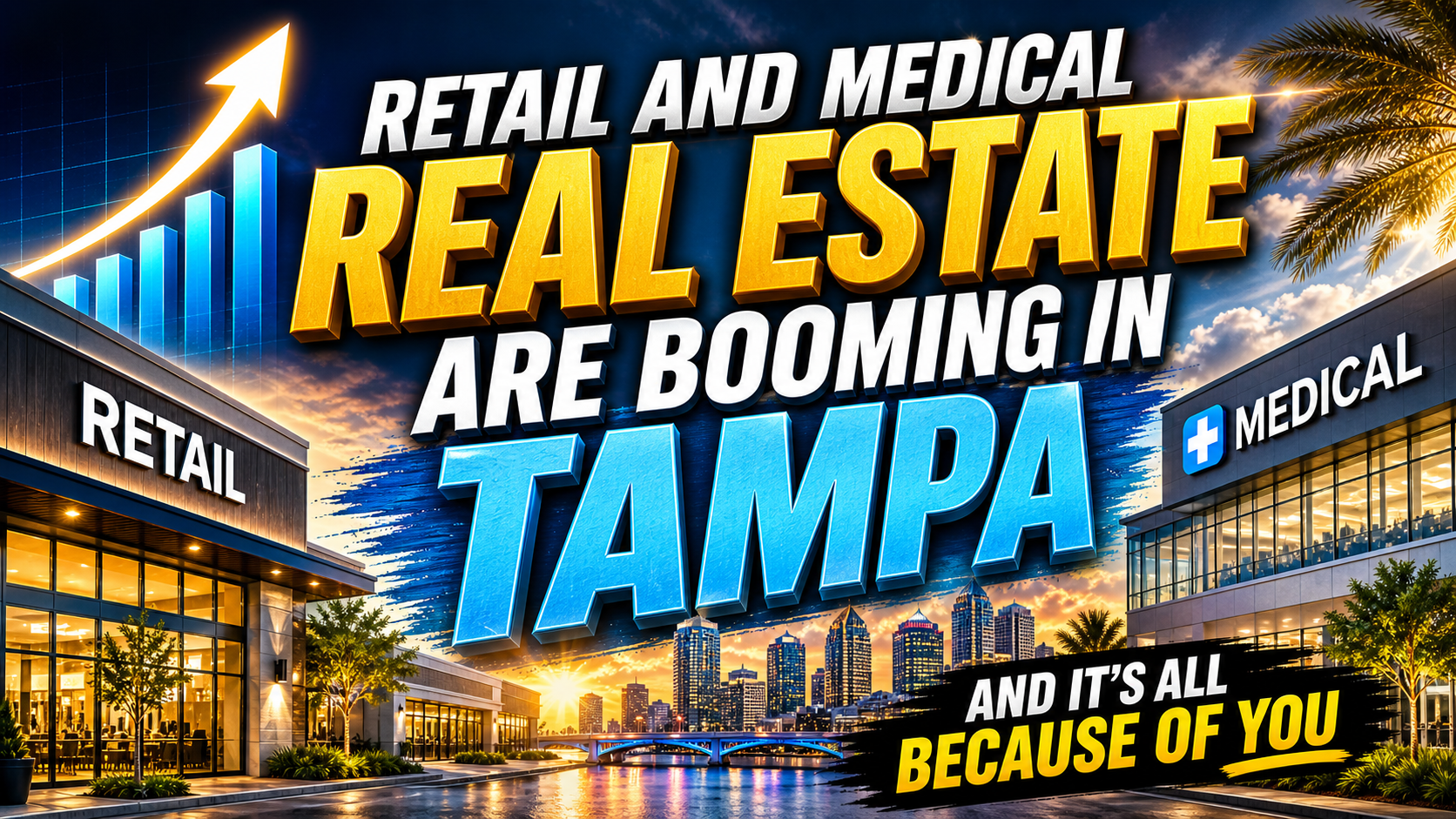

Over the past few years, Tampa commercial real estate has undergone a transformation that is both subtle and powerful. The surge is particularly evident in two sectors—retail and medical real estate—both of which are experiencing unprecedented demand, development, and investor attention. But what makes this growth story truly unique is that it is not being driven solely by institutional investors, policy shifts, or corporate expansions. Instead, it is being fueled by everyday lifestyle decisions made by individuals, families, and professionals who are choosing Tampa as their home. This collective shift in human behavior is reshaping the city’s economic and physical landscape in real time.
Population Growth: The Foundation of Everything

As more people settle in Tampa, the demand for everyday services increases exponentially. Each new household brings with it a need for grocery stores, restaurants, fitness centers, clinics, pharmacies, and more. This creates a ripple effect across the local economy, where commercial spaces must expand to meet growing consumption patterns. Retail plazas that once served smaller communities are now being redeveloped or expanded, while entirely new commercial corridors are emerging in suburban and semi-urban areas. In essence, population growth is not just contributing to real estate demand, it is fundamentally reshaping where and how commercial assets are built.
Retail Real Estate: Reinvented for the Modern Consumer
Developers in Tampa are responding by creating open-air shopping centers, mixed-use developments, and community-centric retail hubs that prioritize walkability, aesthetics, and convenience. Restaurants, boutique stores, fitness studios, and entertainment venues are becoming anchor tenants, drawing consistent foot traffic and enhancing the overall value of these properties. This shift toward experiential retail has made the sector not only resilient but highly attractive to investors who recognize the long-term potential of well-located, thoughtfully designed retail spaces.
Moreover, suburban expansion is playing a crucial role. As more people move away from dense urban cores into surrounding neighborhoods, retail follows them. This decentralization is creating multiple micro-markets within Tampa, each with its own demand dynamics and growth trajectory.
Medical Real Estate: Stability Meets Surging Demand
 8
8Parallel to the rise of retail is the rapid expansion of medical real estate, a sector that is often considered one of the most stable and recession-resistant asset classes. As Tampa’s population grows, not just in size but also in diversity and age, healthcare needs are becoming more complex and widespread. This has led to a significant increase in demand for outpatient facilities, urgent care centers, specialty clinics, and private medical offices.
Unlike traditional hospital-centric models, modern healthcare delivery is shifting toward accessibility and convenience. Patients prefer facilities that are closer to where they live and work, leading to the decentralization of healthcare infrastructure. This trend is driving the development of smaller, strategically located medical properties across Tampa’s expanding neighborhoods.
From an investment standpoint, medical real estate offers compelling advantages. Tenants in this sector typically sign long-term leases, invest heavily in customizing their spaces, and are less likely to relocate frequently. This results in stable cash flow, lower vacancy rates, and predictable returns. As a result, both institutional and private investors are increasingly allocating capital toward medical assets in Tampa, further accelerating development in this space.
The Behavioral Shift: The Real Catalyst Behind the Boom
While economic indicators and demographic data provide valuable insights, they only tell part of the story. The true catalyst behind Tampa’s retail and medical real estate boom is a deeper behavioral shift in how people choose to live their lives. Modern consumers prioritize convenience, accessibility, and quality of life. They want essential services within close proximity, whether it’s a coffee shop down the street, a fitness center within walking distance, or a healthcare facility a few minutes away.
This shift is influencing not just demand, but also the design and placement of commercial properties. Developers are now thinking in terms of ecosystems rather than standalone buildings. Retail and medical spaces are increasingly being integrated into residential communities, creating self-sustaining environments where people can live, work, shop, and receive care without traveling long distances.
In this context, every individual decision, where to live, where to shop, how often to seek healthcare, contributes to a larger economic pattern. Collectively, these decisions are shaping Tampa’s commercial real estate landscape in ways that are both organic and powerful.
Investment Outlook: The Future of Tampa Commercial Real Estate Growth
Looking ahead, Tampa commercial real estate shows no signs of slowing, particularly in the retail and medical sectors. Retail properties that align with experiential and community-driven trends are expected to continue performing well, particularly in high-growth suburban corridors. At the same time, medical real estate will remain a cornerstone of stability, driven by ongoing healthcare demand and demographic shifts.
Investors who understand the underlying drivers of this growth, population movement, consumer behavior, and evolving service needs, are positioning themselves to benefit from both income generation and asset appreciation. The convergence of these factors makes Tampa one of the most compelling commercial real estate markets to watch in the coming years.
Conclusion: You’re Not Just Watching the Growth—You’re Driving It
The story of Tampa’s booming retail and medical real estate sectors is not just about buildings, leases, or investment returns. It is about people. It is about the choices individuals make every day, where they live, how they spend, and what they prioritize. These choices, when multiplied across thousands of residents, create powerful economic momentum that shapes entire cities.
Tampa stands as a clear example of how human behavior can drive real estate transformation. The growth is real, the opportunities are significant, and the momentum is only building. And at the center of it all is a simple truth:
This boom exists because of you.