
Palm trees. Warm gulf breezes. No state income tax. It’s easy to see why so many people are packing up and heading to Florida’s Gulf Coast this year.
But buying a home in Pinellas County isn’t just about beaches and sunshine. It’s a real decision with real numbers, real neighborhoods, and real trade-offs.
Whether you’re a first-time buyer, a growing family relocating from up north, or an investor eyeing rental income, this guide breaks down exactly what you need to know before you make an offer.
At Grace Realty, we work with all four of these buyer types every day across Florida’s Gulf Coast, so we’ve built this guide around the questions we hear most often.
Why Everyone’s Talking About Pinellas County Right Now
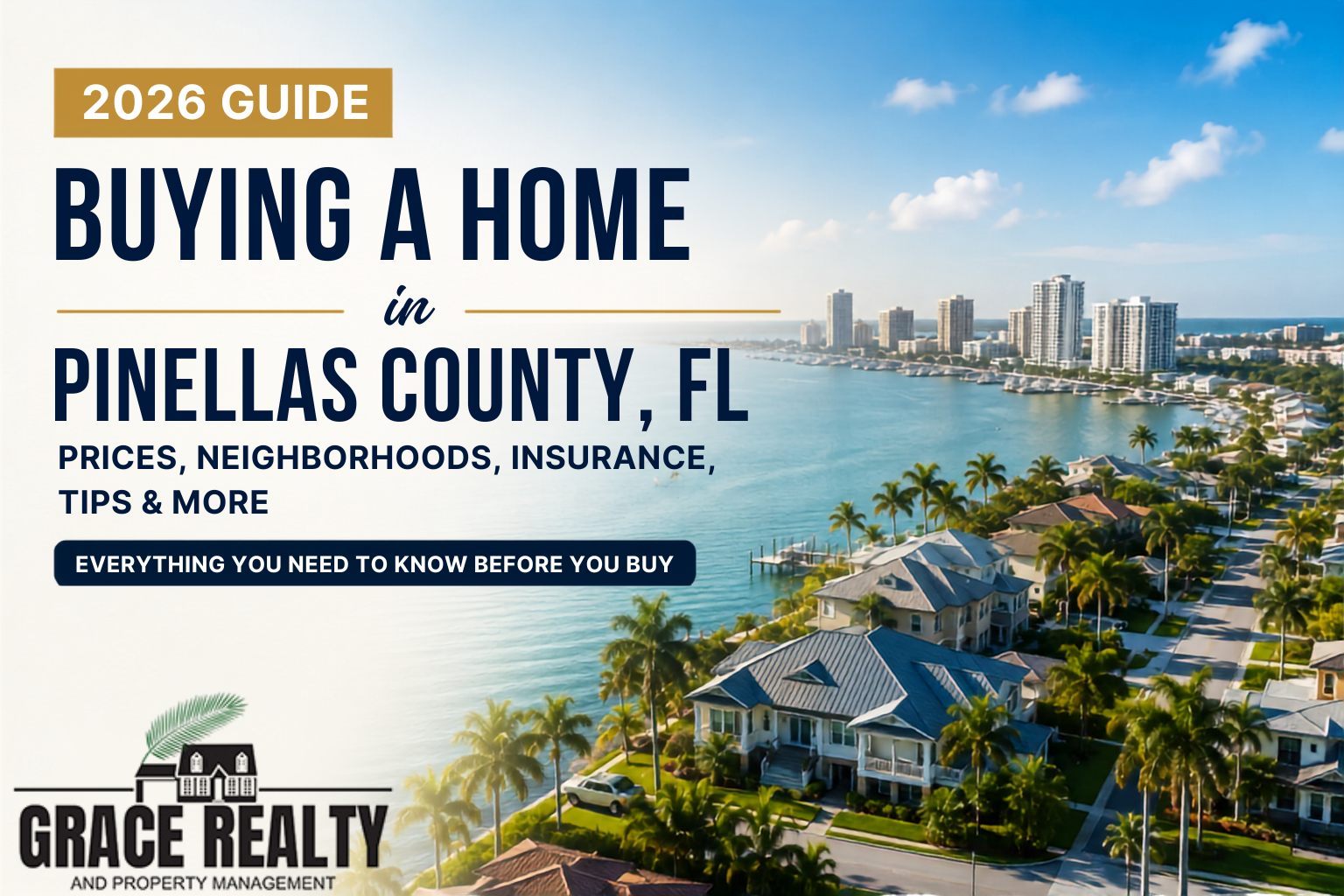
Pinellas County sits on a peninsula between Tampa Bay and the Gulf of Mexico. That means most neighborhoods here are close to water, whether it’s a beach, a bay, or a quiet canal.
Cities like Clearwater, Dunedin, Largo, Seminole, and St. Petersburg all fall inside county lines. Each one has its own personality, but they share the same appeal: walkable downtowns, strong job growth, and some of the best beaches in the country.
That appeal shows up in the numbers, too. The median home sale price in Pinellas County in 2026 sits around $420,500, with home values climbing roughly 3% to 5% a year. Other sources put the typical home value closer to $371,000 to $381,000, depending on the month and data source, so pricing does shift throughout the year.
The good news for buyers? The market has been gradually stabilizing in early 2026 after a long stretch that favored sellers. That shift gives buyers more room to negotiate and more time to make a smart decision instead of rushing into a bidding war.
What It Actually Costs to Buy a Home Here
Let’s talk real numbers, because vague price ranges don’t help anyone.
Median listing prices in Pinellas County are running around $410,000 to $430,000, with homes typically going under contract in 45 to 65 days. That’s a longer timeline than the frenzied pace of a few years ago, and it works in your favor as a buyer.
Insurance is worth budgeting for early. The average homeowners insurance premium through Florida’s state-backed insurer runs close to $1,911 a year, or about $159 a month. Private insurance quotes can be higher or lower depending on your roof age, elevation, and flood zone.
So, before you fall in love with a listing, ask your agent for the flood zone designation and a recent insurance estimate. It can change your monthly budget more than the mortgage rate does.
Pinellas County Neighborhoods Worth a Look
Every buyer’s “perfect neighborhood” looks a little different. Here’s a quick rundown of some of the most popular spots.
Clearwater offers a mix of affordable starter homes and beachfront luxury. It’s a favorite for young families and first-time buyers who want proximity to Clearwater Beach without paying beachfront prices.
Dunedin has a small-town, walkable downtown with breweries, boutiques, and waterfront parks. It attracts buyers who want charm along with strong long-term value.
St. Petersburg delivers big-city energy with a growing arts scene, downtown condos, and easy access to Tampa. It’s popular with young professionals and investors alike.
Largo and Pinellas Park tend to offer more affordable entry points, making them smart picks for first-time buyers or anyone stretching their budget a bit further.
Seminole and Treasure Island blend quiet residential streets with quick beach access, ideal for retirees and families who want a slower pace without giving up the coastal lifestyle.
Not sure which one fits your life? Browse current listings across all of these areas using Grace Realty’s property search tool, or check out our featured listings to see what’s active right now. Prefer something brand new with no repair history to worry about? Take a look at our new construction homes across the county.
A Simple Step-by-Step Plan for First-Time Buyers
Buying your first home can feel overwhelming. Breaking it into steps makes it manageable.
Step 1: Get pre-approved before you shop. A lender will tell you exactly what you can afford, which saves you from falling for a home outside your budget.
Step 2: Define your must-haves. Decide what matters most, like school zone, commute time, or a fenced yard, before you start touring homes.
Step 3: Work with a local agent. A Realtor who knows Pinellas County can flag flood risk, HOA quirks, and pricing red flags that out-of-town buyers often miss.
Step 4: Get a full home inspection. Florida homes face unique wear from humidity, storms, and salt air, so this step is non-negotiable.
Step 5: Review your closing costs. Ask your agent and lender for a full breakdown well before closing day, so nothing surprises you at the table.
If you’d rather skip the guesswork entirely, our team walks first-time buyers through every step. Meet the Grace Realty team to get started.
Selling a Home in Pinellas County? Here’s What Matters
If you’re on the other side of the transaction, pricing strategy is everything right now.
With the market shifting toward more balance between buyers and sellers, overpricing a listing can mean sitting on the market longer than you’d like. A local agent who tracks comparable sales week to week can help you land on a number that attracts strong offers fast.
Presentation still matters, too. Small updates like fresh paint, decluttering, and professional photos consistently help homes sell faster and closer to asking price, according to the National Association of Realtors.
Ready to talk numbers? Contact Grace Realty for a no-pressure pricing conversation.
For Investors: Is Pinellas County Still Worth It?
Short answer: yes, but you need to run the numbers carefully.
Gross rental yield in Pinellas County currently sits around 6.53%, which is solid for a coastal Florida market. Vacation rentals near the beaches of Clearwater, Treasure Island, and Indian Shores can perform especially well thanks to steady tourist demand.
That said, insurance and property taxes eat into returns more than they used to. Factor those costs into your cash-flow projections before you commit to a property, especially anything in a flood zone.
Grace Realty has represented investment buyers across Florida’s Gulf Coast for years. If you want a second opinion on a potential deal, reach out to our team.
For Families Relocating to Florida
Moving your whole family across state lines is a bigger decision than picking a house. A few things deserve extra attention.
Schools. Pinellas County Schools serves the area, and school quality varies block by block, so check ratings for the specific neighborhood you’re considering, not just the county overall.
Flood zones and insurance. Florida’s flood maps change over time. Always check a property’s current flood zone through FEMA before you fall in love with it, since this affects both safety and your insurance bill.
Hurricane season. June through November brings storm season to Florida’s Gulf Coast. Ask about a home’s elevation, roof age, and any past storm damage history.
Commute and lifestyle. Pinellas County is compact, but bridges and seasonal traffic can add time to your commute during peak tourist months. Test-drive the route before you buy.
None of this should scare you off. It just means going in informed, which is exactly what a good local agent is for.
Why Work With a Local Pinellas County Agent
National real estate sites can show you listings. They can’t tell you which street floods every August, or which HOA has a reputation for surprise fees.
Grace Realty has represented buyers, sellers, and investors across Florida’s Gulf Coast for years, with deep roots in communities like Clearwater, Dunedin, Seminole, and St. Petersburg. That local knowledge is the difference between a smooth closing and a stressful surprise.
Browse our current listings, read what past clients have said on our testimonials page, or get in touch to start the conversation. For more local market insights, visit our blog.
Frequently Asked Questions
Is Pinellas County a buyer’s market or seller’s market in 2026? The market is leaning toward more balance in 2026. Inventory has increased and homes are taking longer to sell than in previous years, which gives buyers more negotiating room than they’ve had in a while.
What is the average home price in Pinellas County, FL? Median home prices generally fall between $370,000 and $430,000, depending on the specific city and the data source used. St. Petersburg and Clearwater tend to sit on the higher end, while areas like Pinellas Park are more affordable.
Is Pinellas County a good place for real estate investors? Yes. Gross rental yields run around 6.5%, and coastal cities see strong demand for both long-term rentals and vacation properties. Investors should factor in Florida’s insurance and property tax costs when calculating returns.
What should families relocating to Florida check before buying? Check the flood zone through FEMA, review school ratings for the exact neighborhood, ask about hurricane history and roof age, and get an insurance quote early in the process.
Do I need a local real estate agent to buy in Pinellas County? It’s strongly recommended. A local agent understands flood zones, HOA quirks, and neighborhood-specific pricing trends that national listing sites simply don’t show.
How long does it take to buy a home in Pinellas County right now? Homes are currently going under contract in roughly 45 to 65 days on average, though timelines vary by price point and neighborhood demand.