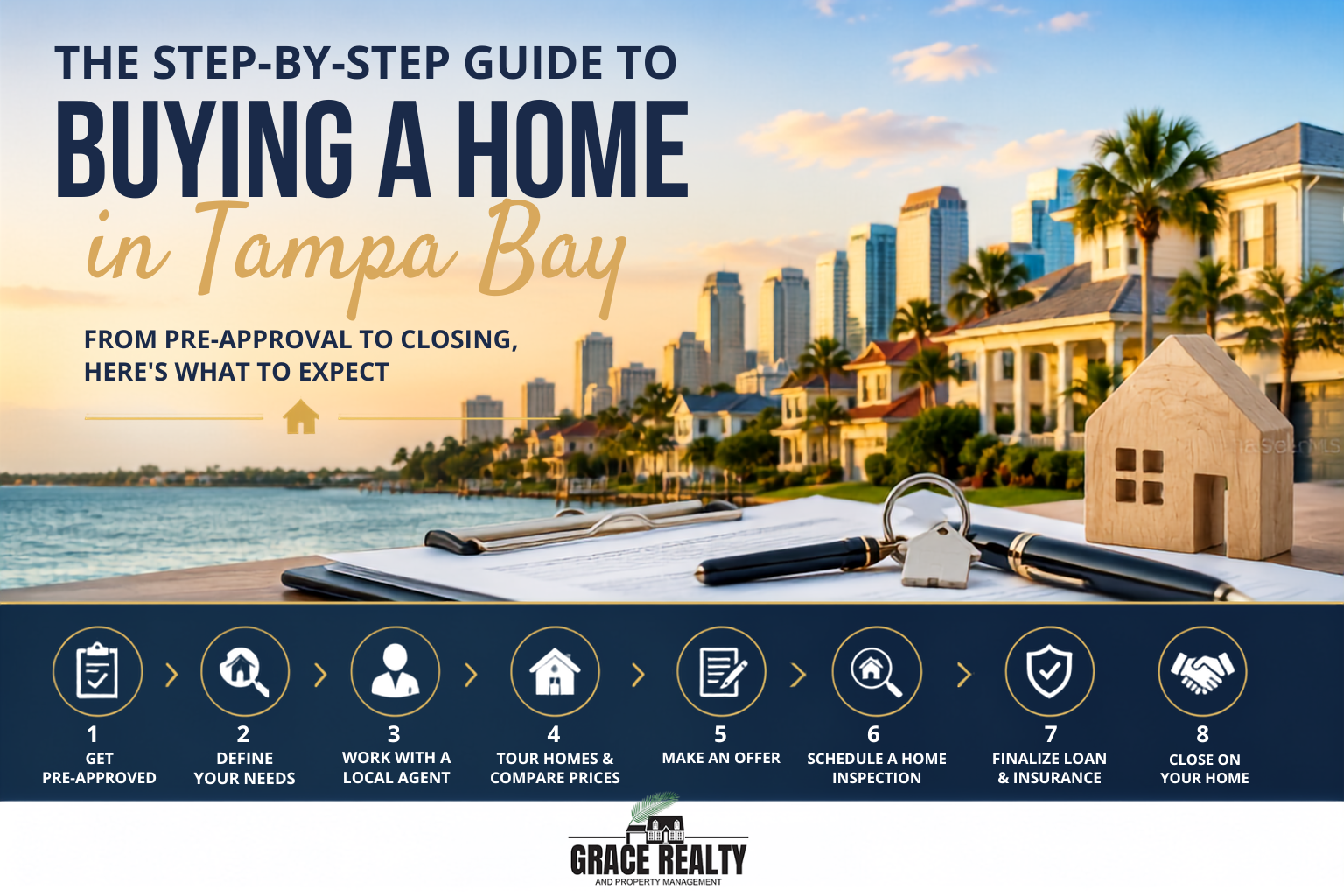

Buying a home in Tampa Bay isn’t complicated once you know the order of operations. But if this is your first time, or your first time buying in Florida specifically, a few steps can trip you up if nobody warns you ahead of time.
This guide walks through the actual process, start to finish. No fluff, no guessing. Just the steps you need to take and what to watch out for at each one.
If you’re still deciding whether now is the right time to buy, we’ve broken that down separately in Is Now a Good Time to Buy in Pinellas County? This article picks up from there, once you’ve decided to move forward.
Step 1: Get Pre-Approved Before You Start Looking
This is the step people skip, and it costs them. A pre-approval letter tells you your real budget, not just what a mortgage calculator guesses. It also makes your offers far more competitive once you find a home you like, since sellers take pre-approved buyers more seriously.
Talk to a lender early, even before your first showing. In a market where good homes still move fast, being pre-approved means you can act the same day you find the right one.
Step 2: Define What You Actually Need
Before you start touring homes, get specific about your must-haves versus nice-to-haves. In Tampa Bay, this usually includes:
- Commute distance to work or school
- Flood zone and elevation
- HOA rules and fees
- Yard space, garage, or storage needs
- Proximity to family, beaches, or specific neighborhoods
Neighborhood choice matters a lot here, since Tampa Bay covers everything from walkable downtown areas to quiet suburban streets. If you want a deeper look at how location affects long-term value, our post on why location still matters breaks down specific areas like Brandon, Riverview, and Apollo Beach.
Step 3: Work With a Local Agent
Tampa Bay is really a collection of smaller markets, not one single market. A neighborhood two miles away can have a completely different flood risk, price trend, or school zone. A local agent who knows these differences can save you from an expensive mistake.
You can browse current inventory anytime through our property search, or reach out directly through our contact page for a shortlist matched to your specific needs.
Step 4: Tour Homes and Compare Real Sale Prices
Listing prices only tell part of the story. Ask your agent to pull recent comparable sales, not just what’s currently listed, so you understand what homes are actually closing at in that neighborhood.
Our featured listings page is updated regularly if you want to see what’s currently available across Tampa Bay. If you’re open to newer construction, it’s also worth checking our new construction page, since builder incentives can sometimes offset today’s higher rates.
Step 5: Make an Offer With the Right Contingencies
Once you find the home, your agent will help you structure an offer that protects you, typically including contingencies for financing and inspection. This gives you an exit if something serious turns up later in the process.
Step 6: Schedule a Home Inspection
This step matters more in Florida than in a lot of other states. Your inspection should specifically cover:
- Roof condition and age
- Wind mitigation features
- Any history of water intrusion or prior claims
- HVAC and plumbing condition
Before you even get to this stage, it’s worth checking a property’s flood zone status through the FEMA Flood Map Service Center. A home in a high-risk zone will need flood insurance on top of standard homeowners coverage, and that cost adds up fast if you’re not expecting it.
Step 7: Finalize Your Mortgage and Insurance
Once your inspection clears, it’s time to lock in your loan terms and shop insurance. Florida’s insurance market has tightened in recent years, so get quotes from multiple providers rather than accepting the first one. Rates can vary significantly between insurers for the exact same home.
Step 8: Close on Your Home
At closing, you’ll review a closing disclosure that lays out every cost involved. Read it carefully and ask questions about anything that doesn’t match what you expected. Once everything is signed, the home is yours.
A Note for Out-of-State and Relocating Families
If you’re moving to Tampa Bay from out of state, most of these steps can be done remotely with the right agent. Video walkthroughs, digital document signing, and a trustworthy local team can make the whole process manageable even if you can’t be here in person for every step. Meet our team on our about page to see who you’d be working with.
A Note for Investors
The steps above apply to investment purchases too, but pay closer attention to property tax rates, local rental regulations, and realistic cap rates rather than pandemic-era comparisons. The National Association of Realtors publishes useful investment market data if you want to dig deeper before committing to a purchase.
Final Thoughts
Buying a home in Tampa Bay comes down to following the right order: get pre-approved, know what you need, work with someone local, and don’t skip the inspection and insurance steps that are specific to Florida. Miss one of these, and it usually costs you money or time later.
Ready to start? Browse our featured listings, check out current market conditions in Pinellas County, or reach out to our team for guidance tailored to your timeline and budget.
Frequently Asked Questions
Q: What’s the first step to buying a home in Tampa Bay? A: Getting pre-approved for a mortgage before you start touring homes. This tells you your real budget and makes your offers more competitive once you find the right property.
Q: How long does the home buying process take in Florida? A: On average, from pre-approval to closing takes about 30 to 45 days once you’re under contract, though this can vary based on financing and inspection timelines.
Q: Do I need flood insurance to buy a home in Tampa Bay? A: It depends on the property’s flood zone. Check the FEMA Flood Map Service Center before making an offer, since homes in high-risk zones require flood insurance in addition to standard homeowners coverage.
Q: Can I buy a home in Tampa Bay if I’m relocating from out of state? A: Yes. Most of the process, including video walkthroughs and digital document signing, can be handled remotely with the right local agent guiding you through each step.
Q: What should a Florida home inspection cover? A: At minimum, roof condition and age, wind mitigation features, any history of water damage or insurance claims, and the condition of HVAC and plumbing systems.